In this guide
- How do you vacuum a pool?
- What you need to vacuum a pool by hand
- How to vacuum a pool manually
- When should you vacuum to waste?
- Which automatic pool cleaner fits your pool?
- How often should you vacuum in Long Beach?
- Common pool vacuuming mistakes
- Want someone else to handle the vacuuming?
- Frequently asked questions
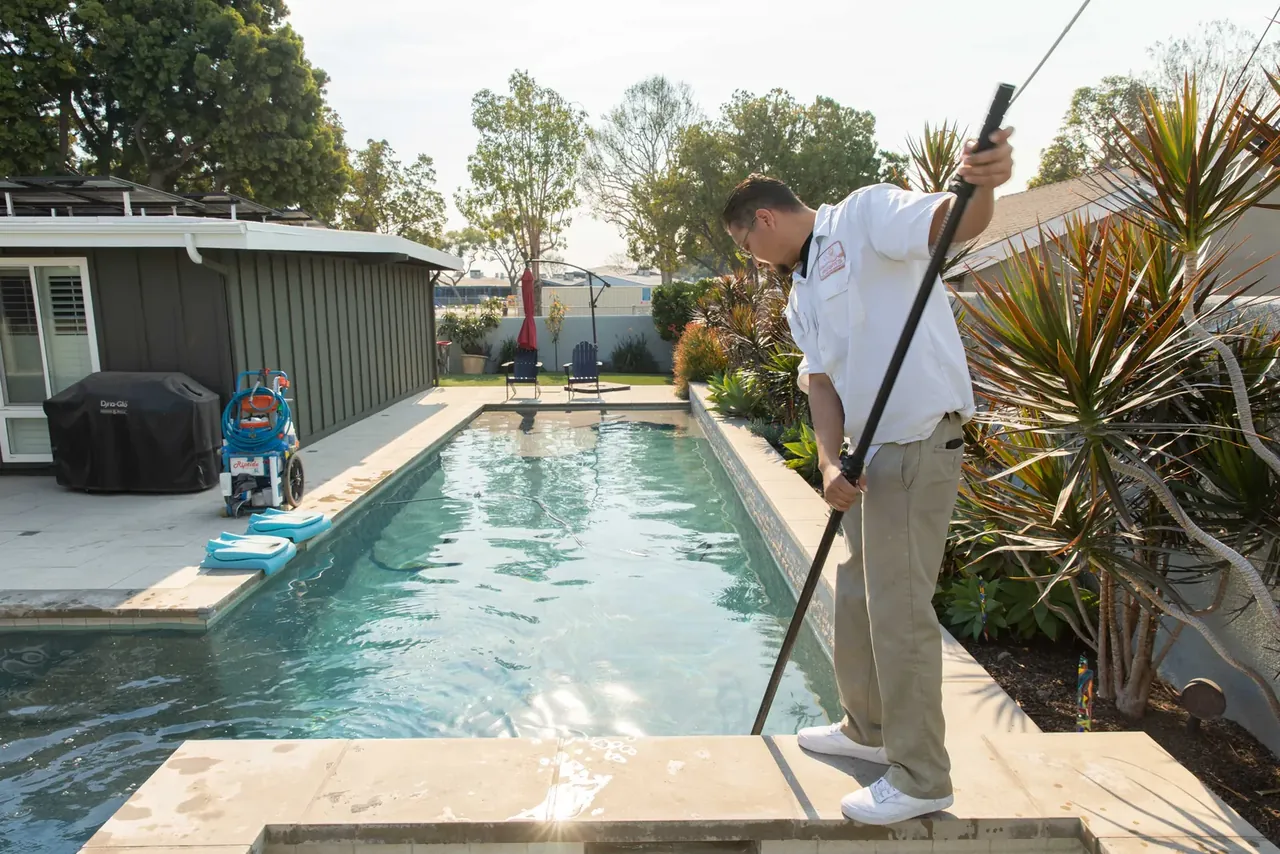
To vacuum a pool by hand, attach a vacuum head to a telescopic pole and fill the hose with water. Then connect it to the skimmer or vacuum port. Then move the head slowly across the floor in overlapping strokes. Automatic cleaners do the same job on their own. Most pools need vacuuming once a week, plus after storms and wind.
I'm Adam, owner and lead technician at Adam's Pool & Spa in Long Beach. Vacuuming is part of every visit on our residential pool cleaning service, and it's the step owners most often rush. Done slowly, it pulls dirt out of the pool instead of stirring it into the water. This is how we do it.
What you need to vacuum a pool by hand
The gear is simple and most pools already have it.
- A vacuum head sized for your pool's surface
- A telescopic pole that reaches the deep end
- A vacuum hose long enough to reach the far wall
- A skimmer plate or vacuum port connection
- A clean skimmer basket and pump basket
A brush helps too. Brushing the walls before you vacuum knocks loose dirt down to the floor, where the vacuum can reach it.
How to vacuum a pool manually
This is the routine we follow on a manual pass.
- Skim and brush first. Clear floating debris, then brush walls and steps toward the floor.
- Attach the head and pole. Connect the hose to the vacuum head.
- Prime the hose. Hold it against a return jet or feed it into the water until bubbles stop.
- Connect to suction. Keep the hose end underwater as you attach it to the skimmer or vacuum port.
- Vacuum slowly. Use long, overlapping strokes, shallow end to deep end.
- Clean up. Empty the baskets, check filter pressure, and clean the filter if it's high.
Slow is the whole trick. Fast strokes kick fine dirt into the water, and it settles back on the floor an hour later.
When should you vacuum to waste?
When the debris would clog or pass through your filter. Heavy silt, a lot of fine dust, or dead algae after a green pool are the usual cases.
Vacuuming to waste only works with a multiport valve. Turn the pump off before you move the valve handle, then set it to waste. The water bypasses the filter and leaves the pool, so watch the level and add water as you go.
Switch back to filter when you're done, with the pump off again. Afterward, check and clean your filter. Our guide on how to clean a pool filter walks through each filter type.
Which automatic pool cleaner fits your pool?
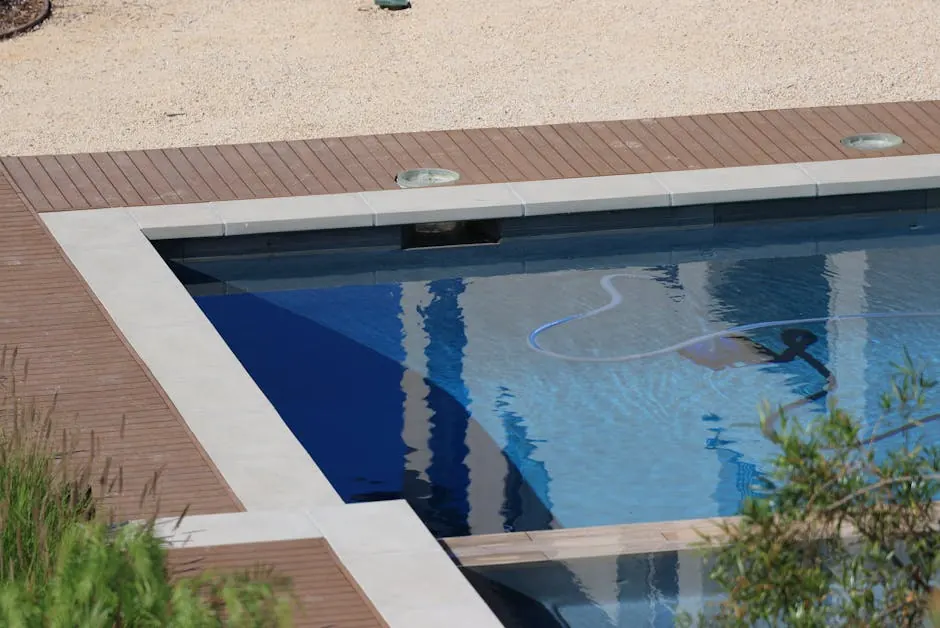
All three move across the pool on their own, but they're powered differently. That changes the energy use and what they catch.
- Suction cleaners connect to the skimmer and use your main pump's suction.
- Pressure cleaners run off a return line, often with a separate booster pump.
- Robotic cleaners plug into low-voltage power and carry their own filter.
The energy gap is large. ENERGY STAR cites a PG&E study where a robotic cleaner used 197 kWh a year. A cleaner powered by the filter pump used 1,675 kWh, and a booster-pump cleaner used 2,989 kWh.
How often should you vacuum in Long Beach?
Once a week for most pools, and more after weather. Our coastal yards collect fine dust, leaves, and blossoms year round.
Santa Ana winds are the big one. A single wind event can coat the floor of a pool in an afternoon. Our post on pool cleanup after Santa Ana winds covers that recovery. Winter storms do the same with runoff and leaves.
An automatic cleaner keeps up between visits. A manual pass each week still catches corners, steps, and the heavy debris a cleaner leaves behind.
Common pool vacuuming mistakes
Most vacuum problems come from a few habits. These are the ones we see most:
- Skipping the prime, so the pump pulls air and loses suction
- Vacuuming too fast and stirring dirt back into the water
- Forgetting to empty the skimmer and pump baskets first
- Leaving a dirty filter in place, which cuts suction
- Changing the multiport valve with the pump running
- Leaving a cleaner in during a shock treatment
Each one is easy to fix once you know it. If suction is still weak after all of them, the pump or plumbing may need a look.
The questions Long Beach pool owners ask most about vacuuming a pool, answered plainly.
Want someone else to handle the vacuuming?
Vacuuming done right is slow, careful work, and it's easy to let it slide on a busy week. At Adam's Pool & Spa, we brush, vacuum, skim, and balance the water on every visit. You can see the full list on what weekly pool service includes. We work across Long Beach and nearby neighborhoods. Schedule a visit and we'll take it off your list.
Adam is the founder, owner, and lead technician of Adam's Pool & Spa, working on pools in Long Beach and nearby LA County for about fifteen years. He is Jandy Certified and a Pentair Expert Installer, and he built the business on education-first, anti-pressure service, including the "Pool School" session each new client gets.
Frequently asked questions
How often should you vacuum a pool?
Once a week for most pools, plus after storms or wind events. Pools under trees or near open lots may need it more often. An automatic cleaner can handle daily light debris, but a manual pass still helps with corners, steps, and heavy loads.
Why does my pool vacuum lose suction?
Usually air in the hose, a full skimmer or pump basket, or a dirty filter. Re-prime the hose so it's full of water, empty the baskets, and check the filter pressure. A leaking hose or cracked vacuum head can also pull air.
Should I vacuum to waste or filter?
Use filter for normal dirt and light debris. Use waste, on a multiport valve, for heavy debris, fine silt, or dead algae that would clog the filter. Waste sends the water out of the pool, so top it back up afterward.
Can a robotic pool cleaner replace manual vacuuming?
For routine dirt, mostly yes. Robotic cleaners scrub and vacuum on their own power and catch debris in an onboard filter. You'll still want to brush, empty baskets, and do a manual pass on steps and after heavy storms.
Should I take my pool cleaner out when I shock the pool?
Many cleaner manuals tell you to remove the cleaner before a shock or heavy chemical treatment. Check the manual for your model, and put it back once chlorine has settled to normal levels.