In this guide
A pool turns green after rain because the storm knocks out its defenses. Rain dilutes chlorine and pulls pH down. Runoff washes in dirt, leaves, and organic matter that use up what chlorine is left. Once free chlorine falls too low, algae takes over. Clear the debris, test, fix the pH, and shock to bring it back.
I'm Adam, owner and lead technician at Adam's Pool & Spa in Long Beach. After the first real storm of the season, our phone fills with calls about green pools. The fix is usually simple once you know what the rain did. Our pool chemical balancing service handles this every winter, and this is the same process we follow.
4 ways rain throws off your pool
Each of these does damage on its own. Together, they explain why a clear pool can go green in a few days.
- Dilution. Rainwater adds gallons with no chlorine in them, so your sanitizer level drops.
- Lower pH and alkalinity. The EPA says normal rain has a pH of about 5.6, well below pool range.
- Debris and runoff. Leaves, dirt, and yard runoff bring organic matter that uses up chlorine.
- A high water line. Overflow raises the level past the skimmer, so floating debris stops getting pulled out.
How Long Beach weather makes it worse
Our rain tends to arrive after a long dry stretch. Months of dust, pollen, and leaves sit on decks, roofs, and planters. The first storm of the season washes all of it into the pool at once.
Wind adds to the load. A Santa Ana event before a storm can fill a pool with leaves that then sit and break down in the rain. We covered that cleanup in our post on pool cleanup after Santa Ana winds.
Warm spells after a storm finish the job. Algae grows faster in warm water, and a mild November week is plenty warm for it.
How to clear a green pool after rain
Work in this order. Shocking before you clear debris and fix the pH wastes chemicals.
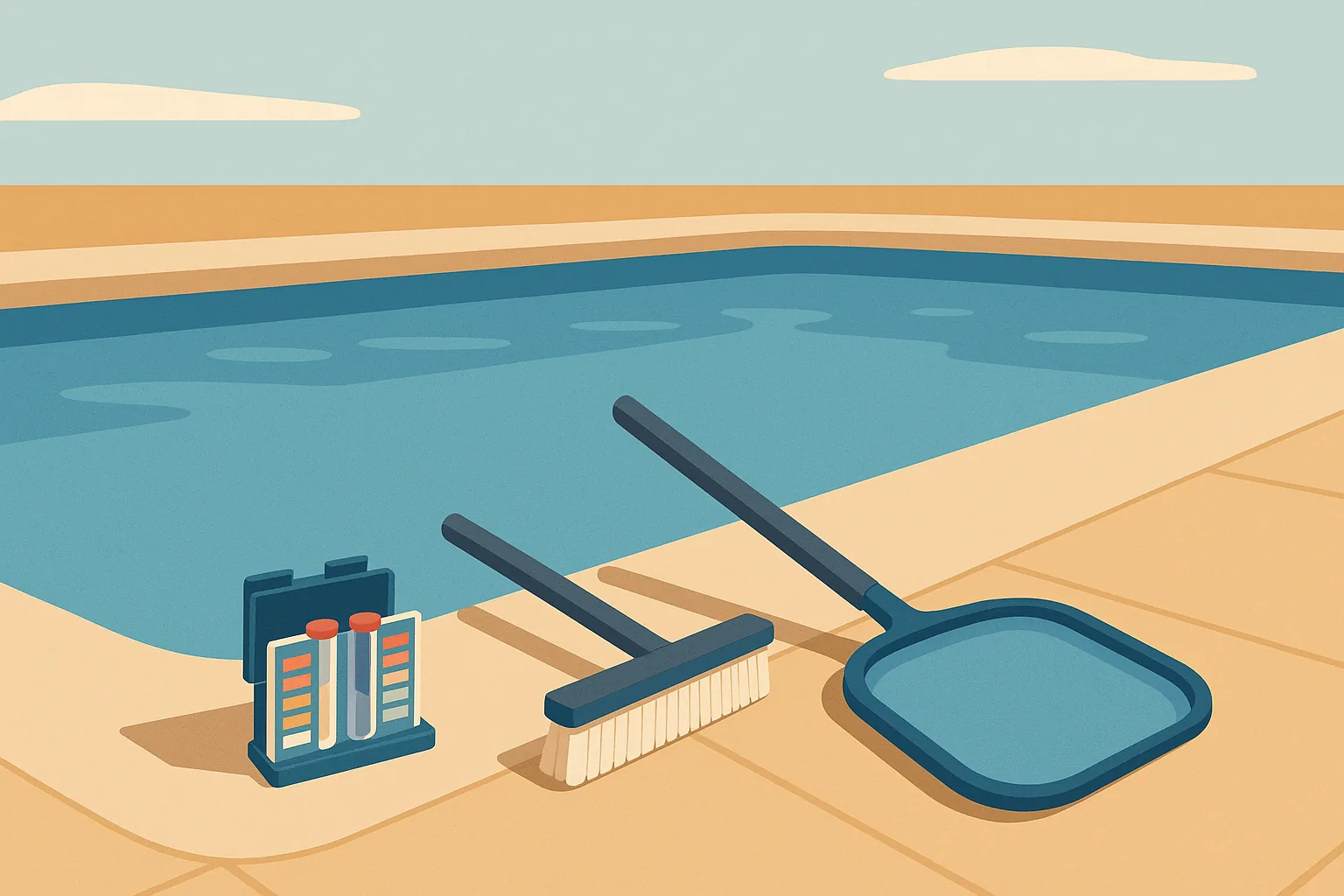
- Remove debris. Skim the surface, empty the skimmer and pump baskets, and brush the walls and floor.
- Lower the water if needed. Bring it back to the middle of the skimmer opening.
- Test the water. Check free chlorine, pH, alkalinity, and cyanuric acid, and write the numbers down.
- Adjust pH first. Chlorine works best when pH is in range, so bring it back before shocking.
- Shock the pool. Use the dose on the product label for your pool's gallons.
- Run the filter and clean it. Keep the pump running, then clean the filter as it loads up.
If the pool is still green after a couple of days, something else is going on. High cyanuric acid, a weak pump, or a dirty filter can all stall a recovery. Our guide on why a pool turns green walks through those causes.
Safety notes before you shock
Shock and pH chemicals can hurt you if they're handled carelessly. A CDC release on pool chemical injuries warns never to mix pool chemicals, and says mixing chlorine and acid is especially dangerous.
Follow these every time:
- Read the label and wear the eye and hand protection it calls for.
- Add chemical to water, never water to chemical.
- Add one product at a time, and never pour two into the same bucket.
- Keep kids and pets away while you work, and store chemicals out of reach, with acid and chlorine kept apart.
- Keep swimmers out until free chlorine and pH are back in range.
If you're not comfortable handling shock or acid, that's a good reason to call a pro. The same goes for a pool that stays green after a full round of treatment.
How to prep your pool before the next storm
A little work before the rain saves a recovery after it. Most of this takes a few minutes the day before a forecast storm.
- Raise chlorine toward the top of your normal range.
- Clean the skimmer and pump baskets so they have room for debris.
- Trim back branches and move loose planters away from the edge.
- Keep the pump running for at least one full turnover a day.
- Stay clear of the equipment during lightning or standing water.
Then test the day after the rain stops. That one test catches most problems while they're still small.
The questions Long Beach pool owners ask most about green water after a storm, answered plainly.
Need help clearing your pool after a storm?
A green pool after rain is fixable, and it doesn't have to cost you a weekend. At Adam's Pool & Spa, we clear the debris, test the water, and balance the chemistry in the right order. We work across Long Beach and nearby neighborhoods. We'll also explain what the storm did, so you know what to watch next time. Schedule a visit and we'll get your water clear.
Adam is the founder, owner, and lead technician of Adam's Pool & Spa, working on pools in Long Beach and nearby LA County for about fifteen years. He is Jandy Certified and a Pentair Expert Installer, and he built the business on education-first, anti-pressure service, including the "Pool School" session each new client gets.
Frequently asked questions
Why does my pool turn green after it rains?
Rain dilutes your chlorine, lowers your pH and alkalinity, and washes dirt, leaves, and other organic matter into the water. That debris uses up chlorine fast. Once free chlorine drops too low, algae grows, and in warm water that can happen within a day or two.
Should I shock my pool after rain?
Test first. If chlorine is low or the water is turning green or cloudy, shock it. Clear debris and fix the pH first. Follow the product label for your pool size, and keep everyone out until chlorine is back in range.
Should I drain water after heavy rain?
Only if the level rose above the middle of the skimmer opening. At that height the skimmer stops pulling debris off the surface. Lower it back to mid-skimmer, then test and rebalance, because the rain changed the chemistry.
Can I swim in a pool after rain?
Test it first. The CDC recommends free chlorine of at least 1 ppm and pH from 7.0 to 7.8 in home pools. If the water is green or cloudy, or the numbers are off, stay out until it's clear and balanced.
How do I keep my pool from turning green when it rains?
Raise chlorine toward the top of your range before a storm, and clean the skimmer and pump baskets. Keep the pump running for at least one full turnover a day. Test and adjust the day after the rain stops.