10 Pool Maintenance Mistakes That Cost Money and How to Avoid Them

Jandy Certified Pentair Expert Installer NPT Lifetime-Warranty Partner 15+ Years Local 24-Hour Callback Commitment Pool School Onboarding C-53 California Pool Contractor License

It's hard to find a company you can fully trust on chemistry, so most homeowners guess. The common pool maintenance mistakes that cost Long Beach homeowners the most are skipped weekly testing, daytime shock, pH drift, cyanuric acid lockout, and under-run pumps. This guide walks through 10 mistakes, the cost of each one, and the fix.

Adam's Pool and Spa Service has serviced coastal pools across Long Beach for about 15 years. We log the same mistakes on first-call diagnostics every week, and we publish them here so you can self-audit before the pump quits.

What are the most common pool maintenance mistakes?

The most common pool maintenance mistakes Long Beach homeowners make are skipping weekly water tests, adding shock during the day, letting pH drift above 8.0, missing cyanuric acid lockout, brushing only once a week, skipping filter backwash, running the pump under 8 hours, adding salt without testing, ignoring the pressure gauge, and buying filler-laden big-box chemicals. Each one feels small. Each one drives a $30 to $2,000 cost the next month.

The 10 mistakes we see most often on Long Beach pools

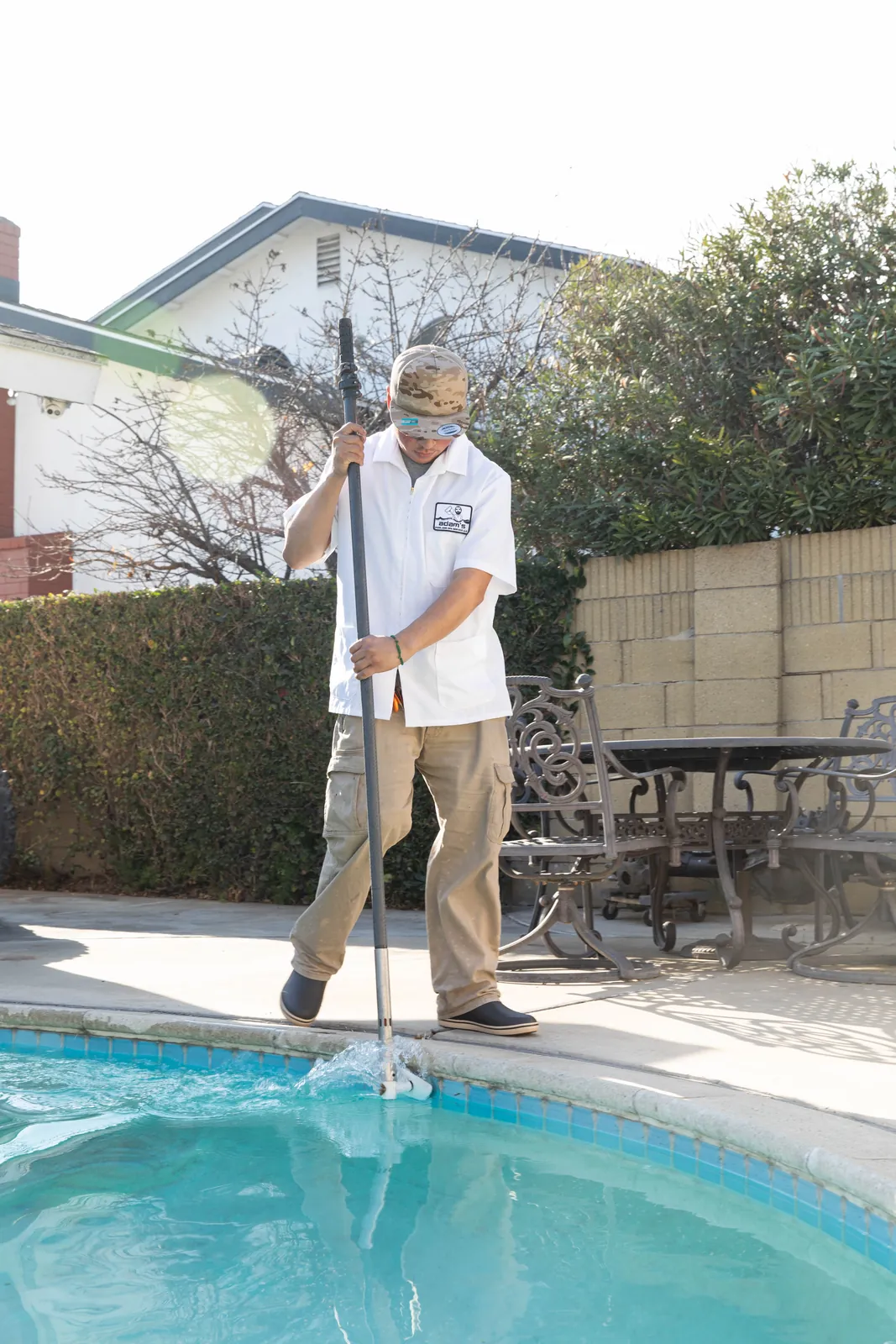
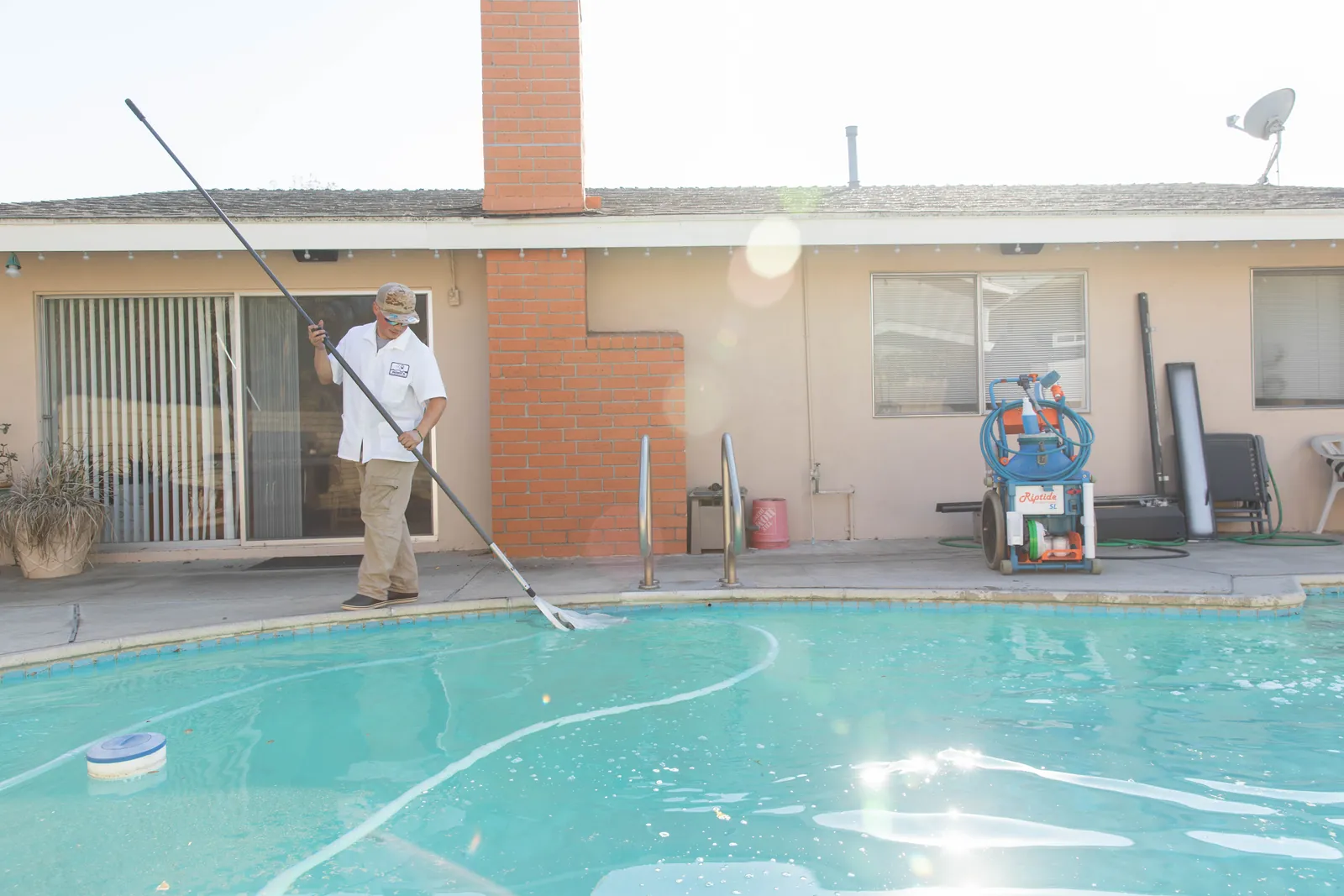
Person standing on pool deck using long-handled net to clean water in rectangular pool.

Ten habits drive the bulk of every "my pool is acting up" call we run. Each card names the mistake, why it matters, and the fix.

Skipping weekly water testing

Skipping weekly water testing

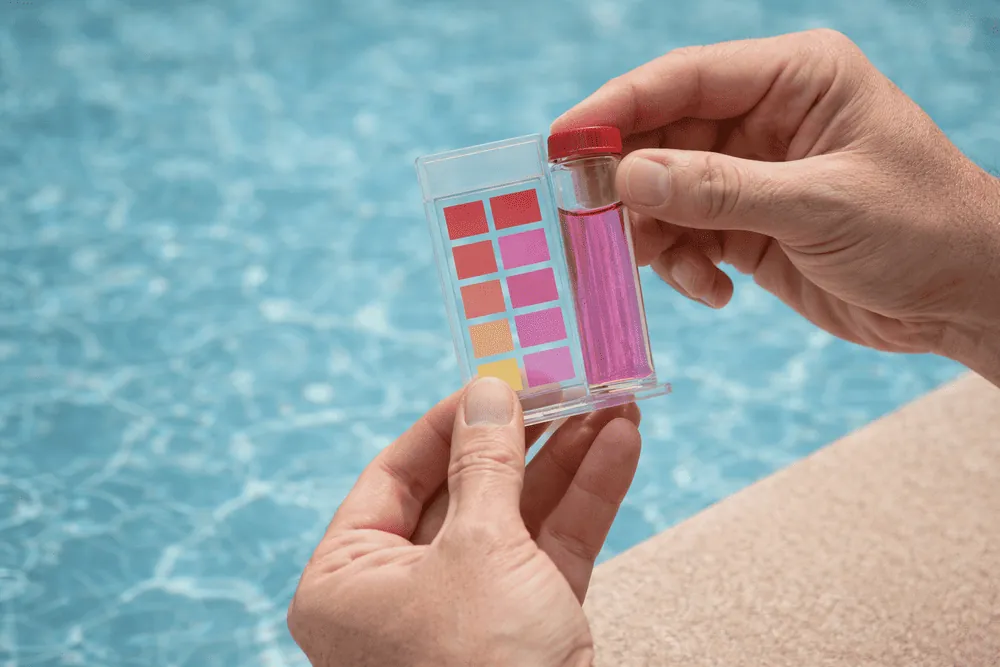
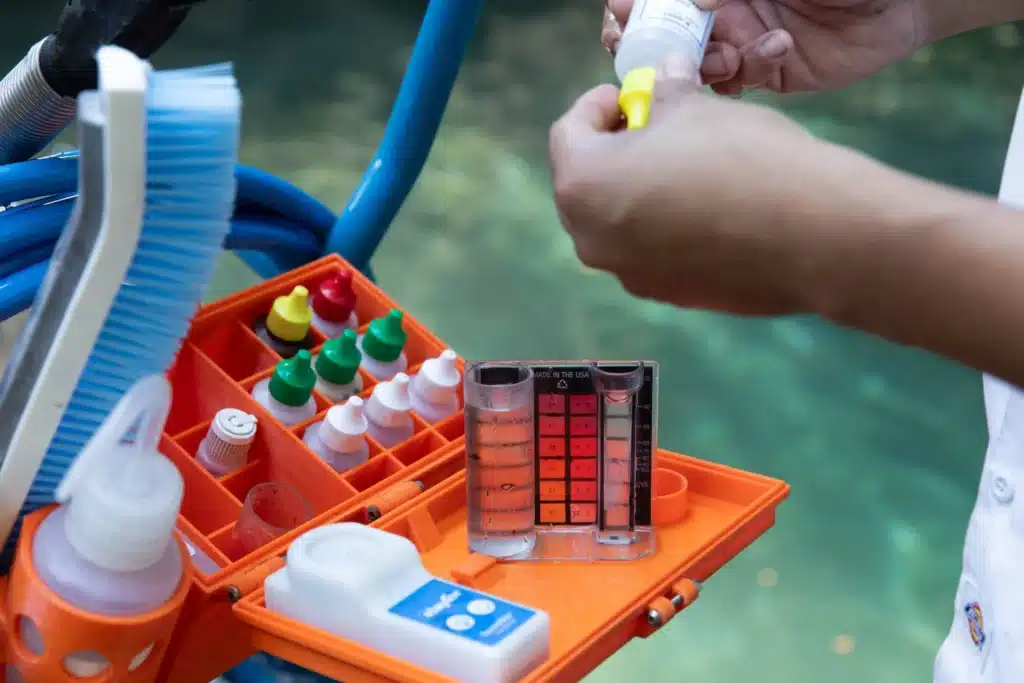
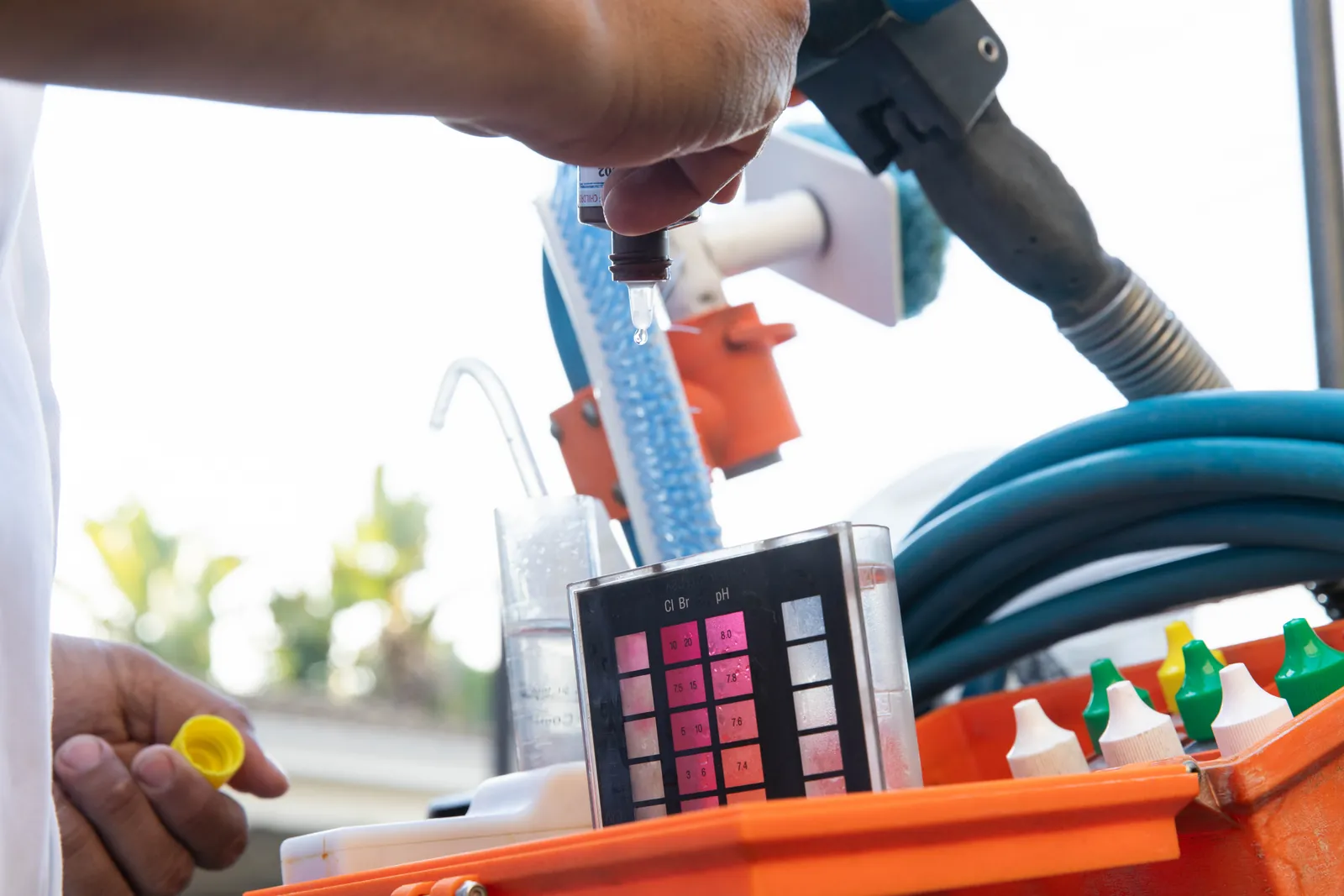
Pool water changes daily from sun, swimmers, and marine layer humidity. Test free chlorine, pH, and alkalinity once a week, twice in summer. Three minutes of testing prevents most green-pool emergencies. See our pool chlorine levels guide for target ranges.
Adding shock during the day

Adding shock during the day

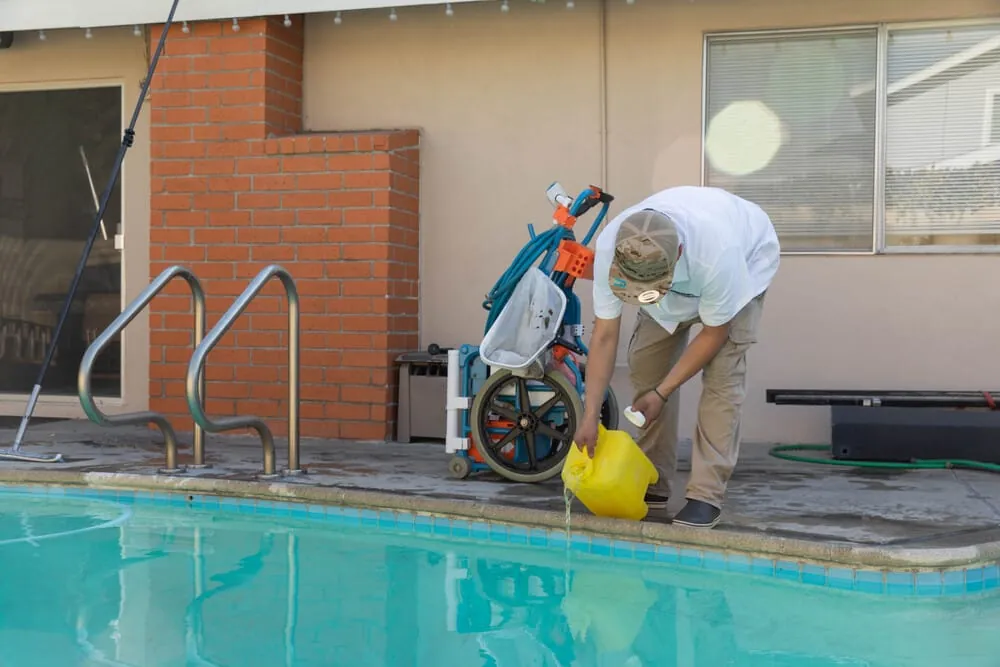
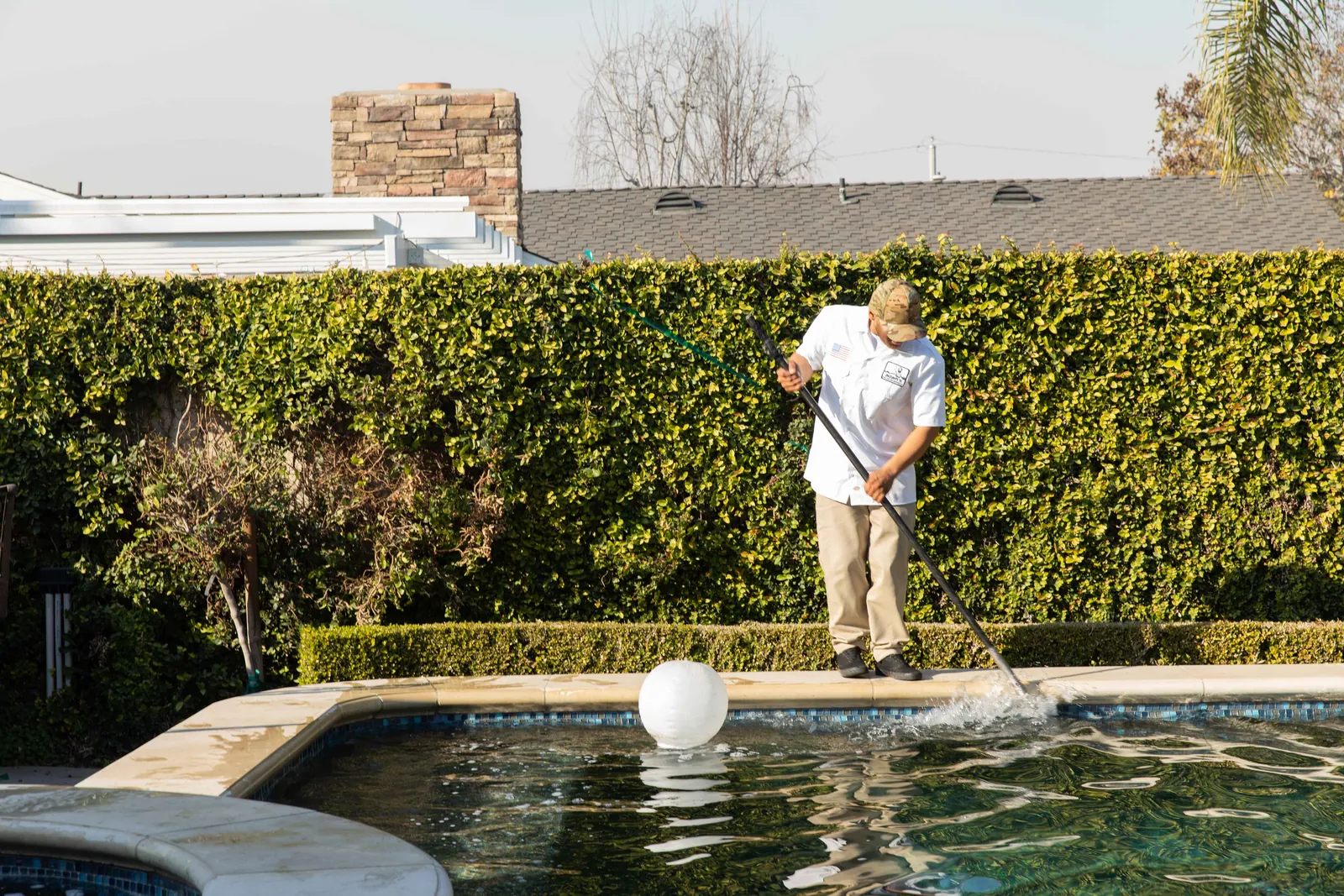
UV destroys 90 percent of unstabilized chlorine within a few hours of midday sun. Shock at dusk, run the pump overnight, and let the chlorine work while the sun is down. Daytime shock wastes a $20 jug per dose.

Letting pH drift above 8.0

Letting pH drift above 8.0

At pH 8.0, free chlorine is roughly 80 percent inactive. The chlorine reads on the test strip, but it cannot kill algae. Hold pH between 7.4 and 7.6 and target alkalinity at 80 to 120 ppm. Our how to lower pH in pool guide walks the math.

Missing cyanuric acid lockout

Missing cyanuric acid lockout

Cyanuric acid (CYA) above 80 ppm chemically binds free chlorine and stops it from sanitizing. Trichlor tablets push CYA up over time. The only fix is a partial drain. Most homeowners shock harder and waste another $40 in cal hypo.

Brushing only once a week

Brushing only once a week

Algae spores hide in plaster pits, behind ladders, under skimmer lips. Brush walls, floor, and steps two or three times a week, especially in summer. Skipping the brush is the silent reason a pool goes green between visits.

Skipping filter backwash or cartridge clean

Skipping filter backwash or cartridge clean

A clogged filter starves circulation, and stagnant water breeds algae. Backwash sand or DE filters when pressure rises 7 to 10 psi above clean baseline. Hose cartridges monthly. Our common pool problems pillar covers the symptoms in depth.

Running the pump under 8 hours per day

Running the pump under 8 hours per day

Pool water needs at least one full turnover daily, which lands at 8 to 12 hours of pump time. Trying to save on electricity by running 4 hours costs more in algae recovery than it saves on the bill. A variable-speed pump cuts the cost without cutting the time.

Adding salt without testing

Adding salt without testing

A saltwater chlorinator (SWG) needs 2,700 to 3,400 ppm salt to produce chlorine. Dumping a bag without a salt test can over-salt the cell and corrode plates. Always test first, then add half the calculated amount, retest in 24 hours.

Ignoring the pressure gauge

Ignoring the pressure gauge

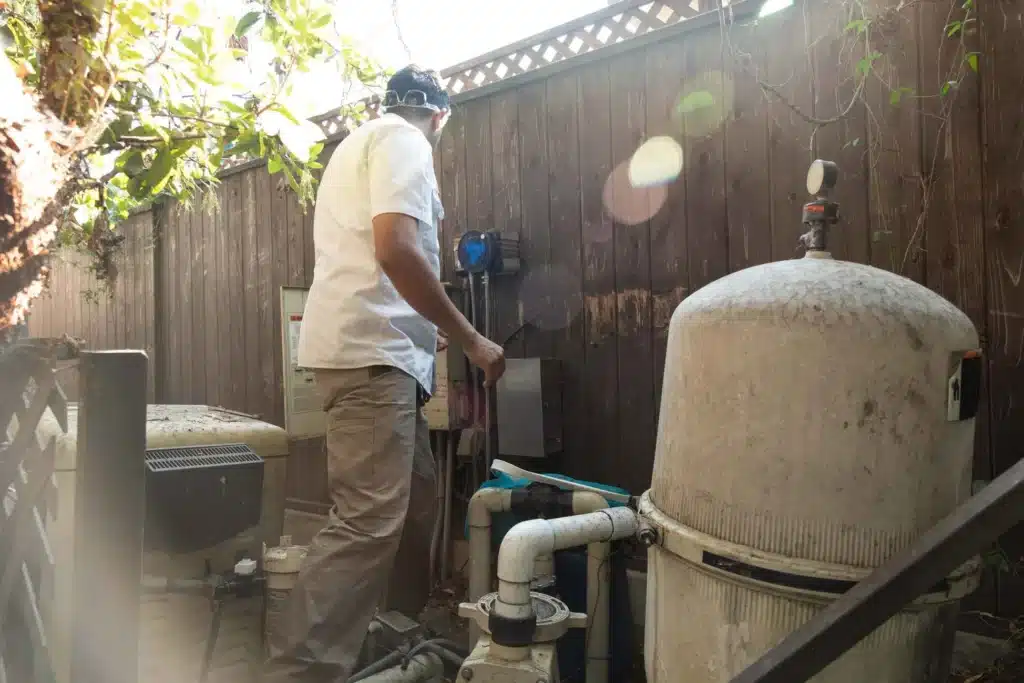
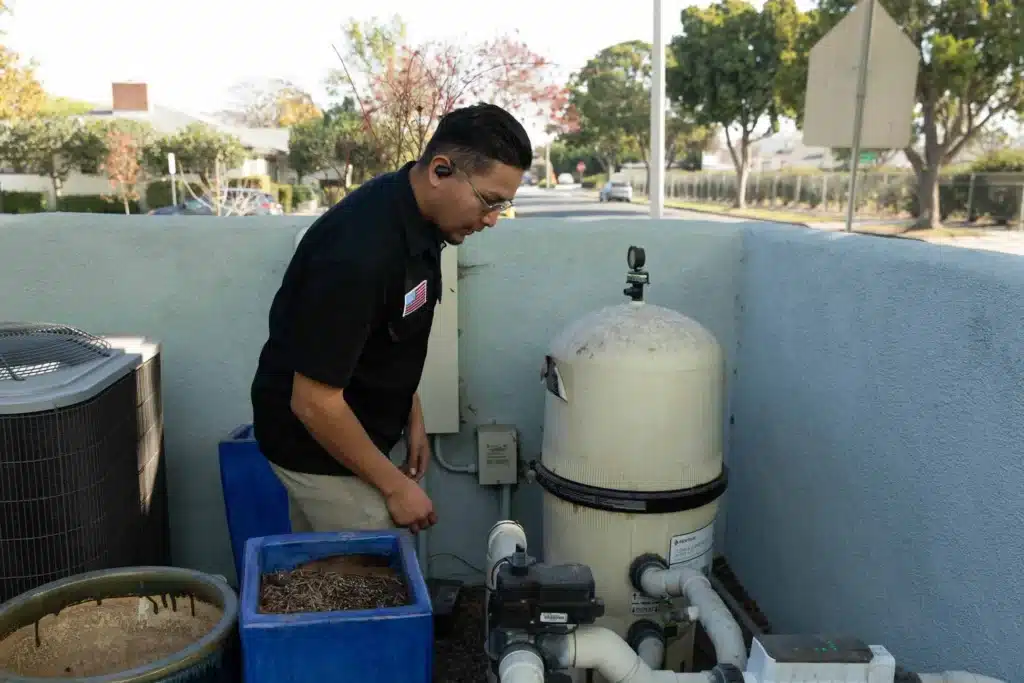
The round dial on top of the filter is the cheapest diagnostic on the pad. Write the clean baseline on the housing in a Sharpie. A 7 to 10 psi rise means clean the filter. A sudden drop means a suction-side air leak or a basket clog.

Buying filler-laden big-box chemicals

Buying filler-laden big-box chemicals

Cheap retail shock often runs 30 to 40 percent calcium hypochlorite, the rest is filler that clouds water and builds calcium hardness. A 65 to 73 percent cal hypo from a pool supply costs more per bag and dramatically less per dose.

What each mistake costs you

Wasted chemistry, $30 to $80 per month

Daytime shock, big-box low-percentage cal hypo, and pH drift compound. A homeowner ends up dosing 30 to 50 percent more chlorine than a balanced pool needs. Over a season, that is $200 to $500 in chemistry that went straight to UV destruction or chloramine bind-up.

Pricing Quoted on inspection
Algae bloom recovery, $300 to $700

A green pool that sat past 48 hours costs roughly $150 in shock, $40 in algaecide, $50 in clarifier, plus a service call for the brush, vacuum-to-waste, and filter teardown. CYA lockout pushes the number toward the upper end because a partial drain is required before chemistry will hold.

Pricing Quoted on inspection
Pump or heater damage, $600 to $2,000

Running the pump under-time and ignoring the pressure gauge sends the motor and bearings to failure faster than designed. A bearing rebuild lands $300 to $1,400, a full motor swap on a coastal yard runs $600 to $2,000. A heater scaled by months of high pH adds another $400 to $1,200 in ignitor and pressure-switch work.

Pricing Quoted on inspection

How a pro avoids these on every weekly visit

The honest answer is that the pro doesn't do anything magical, the pro is consistent. Adam explained every piece of equipment to clients in our Pool School onboarding, and the same checks show up on every weekly route.

Test before adding anything

Free chlorine, pH, alkalinity, calcium, and CYA logged in a notebook or app. No guess dosing.

Shock at dusk only

Calcium hypochlorite predissolved, added with the pump running, never during peak sun.

Brush every visit

Walls, steps, behind the ladder, around the light niche. Two minutes of brush per visit kills the algae that future shock would never reach.

Read the pressure gauge

Compare against the clean baseline written on the housing. Backwash or clean cartridge at the 7 to 10 psi rise, not on a calendar.

Empty every basket

Pump basket, every skimmer basket, automatic cleaner bag. A clogged basket starves the pump and burns the impeller.

Watch the pump run time

A variable-speed pump set to 8 to 12 hours daily, with a low-speed overnight cycle. Cuts the bill, keeps turnover.

Buy chemistry from a pool supply

Higher active percentage, no fillers, predictable doses. Saves money even though the bag costs more.

Verified Google Reviews

What Long Beach pool owners say after switching to weekly service

"Adam's Pool and Spa Service service was communicative, competitively priced, timely, and professional at every step of my pool filter and salt water chlorinator install. Adam explained every piece of equipment and how to maintain it in a way that I could understand."
"adam and his crew just cleaned our pool at the new house after it had been neglected and it looks brand new. so blue and clear water. gave us a bunch of knowledge on how to help take care of it in between cleanings."
"Adam services my pool and consistently provides excellent, reliable service. He handles everything you'd want from a professional pool and spa company: regular cleaning, chemical balancing, water testing, filter maintenance, equipment checks, troubleshooting, and seasonal upkeep."
FAQ

Frequently asked questions about pool maintenance mistakes

Is professional pool service really worth the extra cost compared to DIY?

For a pool that already has balanced water and a clean filter, weekly DIY can work. The math flips when chemistry has drifted, CYA has built up, or the pump is past 8 years. One algae bloom, one pump rebuild, or one heater scale event covers a year of weekly service. Customers tell us their service and professionalism are worth the extra cost once they have paid for the alternative.

How do I know I can trust a Long Beach pool company?

Look for named credentials, not generic "experience." Jandy Certified and Pentair Expert Installer are manufacturer programs you can verify. Look for tenure in your specific neighborhood and reviews dated multiple years apart. Adams has clients in Long Beach who have been with us since 2016, since they built their pool 7 years ago, and 4 years and counting.

Why did my pool stay green even after I shocked it?

Two reasons we see weekly. First, cyanuric acid is above 80 ppm and the chlorine is bound up in CYA lockout, so the shock never activates. Second, pH is above 7.8 and the chlorine that did activate is roughly 50 to 80 percent inactive. Test CYA and pH first. If CYA is high, partial drain before another shock. Our why is my pool green guide covers the full path.

How long should a pool pump actually run each day?

8 to 12 hours daily on most residential Long Beach pools, year-round. Year-round swim season here means there is no off-season turnover relief. A variable-speed pump on a low overnight cycle covers the turnover at 30 to 40 percent of the electric cost of a single-speed.

Should I shock my pool during the day or at night?

Always at dusk or after dark. UV destroys unstabilized chlorine within hours, and a daytime shock can lose half its strength before it sanitizes. Add shock with the pump running, brush the walls, and let it cycle overnight.

What is cyanuric acid lockout and how do I fix it?

CYA above roughly 80 ppm chemically binds free chlorine. The chlorine is in the water but not active. The only real fix is a partial drain (typically 30 to 50 percent water swap) to dilute CYA, then rebalance. Switching from trichlor tablets to liquid chlorine prevents it from rebuilding.

Are big-box pool chemicals worth buying?

Sometimes. The cheap shock buckets often run 30 to 40 percent active chlorine with the rest as filler that clouds water and builds calcium hardness. A 65 to 73 percent cal hypo from a pool supply costs more per bag and far less per dose. Read the active percentage before you buy.

How fast can a small mistake turn into an expensive repair?

48 hours for an algae bloom in summer. Two to three weeks for a clogged filter to start straining the pump. A few months of high pH for the heater core to scale up. The mistakes themselves are slow, the dollar consequence is fast.

Stop the cost cycle, start a Long Beach weekly service quote

Call Adam's Pool and Spa Service for a weekly service quote, a chemistry audit, and a Pool School onboarding session that names what your pool actually needs. We answer Monday through Saturday, 7 AM to 5 PM.

Related reading: residential weekly pool maintenance · residential chemical balancing · residential pool cleaning service · common pool problems · why is my pool green · why is my pool cloudy · pool chlorine levels guide · how to lower pH in pool · seasonal pool care calendar.

External references: Wikipedia entry on swimming pool sanitation · CDC residential pool water testing and treatment guidance · U.S. Consumer Product Safety Commission pool and spa safety center.

Adam, owner of Adam's Pool and Spa Service

About the author

Adam · Owner, Adam's Pool and Spa Service

Adam Aguirre has logged the same 10 maintenance mistakes on first-call diagnostics across Long Beach for 15 years, with most clients moving from reactive shocking to a balanced weekly routine within their first month on Pool School onboarding. Adam personally runs the chemistry audit on every new account.