Why Is My Pool Green? 4 Causes and How to Clear It Fast

Green water, slimy walls, a chlorine smell that hits the second you open the gate: a green pool almost always means algae, and it almost always means something stopped the chlorine from doing its job. Whether it's low free chlorine, a high pH killing sanitizer effectiveness, a stabilizer lockout, or a broken filter that hasn't circulated the water for days, the fix follows the same playbook. This guide from Adams Pool & Spa walks through every cause, the step-by-step green-to-clean process, why shock sometimes fails, the saltwater angle, and when to hand it to a pro.

Why is my pool green?

A green pool almost always means algae growth caused by low free chlorine, high pH, or poor filter circulation. The fix is to lower pH to 7.2-7.4, shock with calcium hypochlorite (10 ppm or higher), brush every wall and the floor, and run the pump 24/7 until the water clears. Severe cases need professional green-to-clean treatment.

That's the 30-second answer. If your pool is mildly tinted, the steps below will clear it. If it looks like swamp water, skip ahead to when to call a pool professional.

Is it safe to swim in a green pool?

No. Green water means the sanitizer is losing the fight, which lets bacteria grow alongside the algae. Algae itself isn't usually the direct health risk: it's what else is living in water that no longer has active chlorine. The CDC's healthy swimming guidance is clear that free chlorine must stay at or above 1 ppm for the water to be considered sanitary.

Stay out until the water is clear, free chlorine reads 1-3 ppm consistently, and you can see every fitting on the pool floor.

What causes a pool to turn green?

Green water is the visible symptom. The real causes live in chemistry, circulation, and equipment.

Algae growth

Algae growth

The primary culprit. Three common types in Long Beach pools:

  • Green algae (the usual suspect): floats in the water and coats walls
  • Yellow/mustard algae: clings to shaded walls, resists normal chlorine
  • Black algae: pinhead-sized black spots in plaster pits, extremely stubborn

Algae spores are always in the air. Any time chlorine drops, warmth and sunlight give them a head start, and within 24-48 hours you can go from clear to tinted to full bloom.
Low free chlorine

Low free chlorine

The most common trigger. Free chlorine under 1 ppm means no active sanitizer. Sun, heat, heavy swimmer load, a skipped week of service, or a bad tablet feeder can drop chlorine fast.

High pH (chlorine ineffective)

High pH (chlorine ineffective)

Even with "enough" chlorine on paper, pH above 7.8 cuts chlorine effectiveness in half. At pH 8.0, chlorine is only about 20% active. This is why some pools turn green with a full chlorine reading: the chlorine is there, but it's inactive.

Pump or filter not running enough

Pump or filter not running enough

Pool water needs at least one full turnover per day. Short run times, a failing pump, a clogged filter, or a closed valve all starve the water of circulation, and still water breeds algae fast.

High cyanuric acid (CYA lockout)

High cyanuric acid (CYA lockout)

CYA above 80 ppm starts locking chlorine up. The sanitizer is in the water but chemically bound to the stabilizer, so it can't kill algae. This is the silent cause behind "I shocked it and it's still green" and usually shows up in pools that rely on trichlor tablets for years without a dilution.

High phosphates

High phosphates

Phosphates are algae food. They enter pools through fill water, fertilizer runoff, and some pool chemicals. High phosphates alone won't turn a properly sanitized pool green, but they make algae blooms harder to kill and faster to return.

Metals (green but clear scenario)

Metals (green but clear scenario)

If the water is tinted green but crystal clear with high chlorine, you probably have copper or iron in the water, not algae. Sources: corroding heater elements, ionizer systems, well water, or aggressive low-pH chemistry eating metal surfaces. A metal sequestrant is the fix, not shock.

How do you fix a green pool?

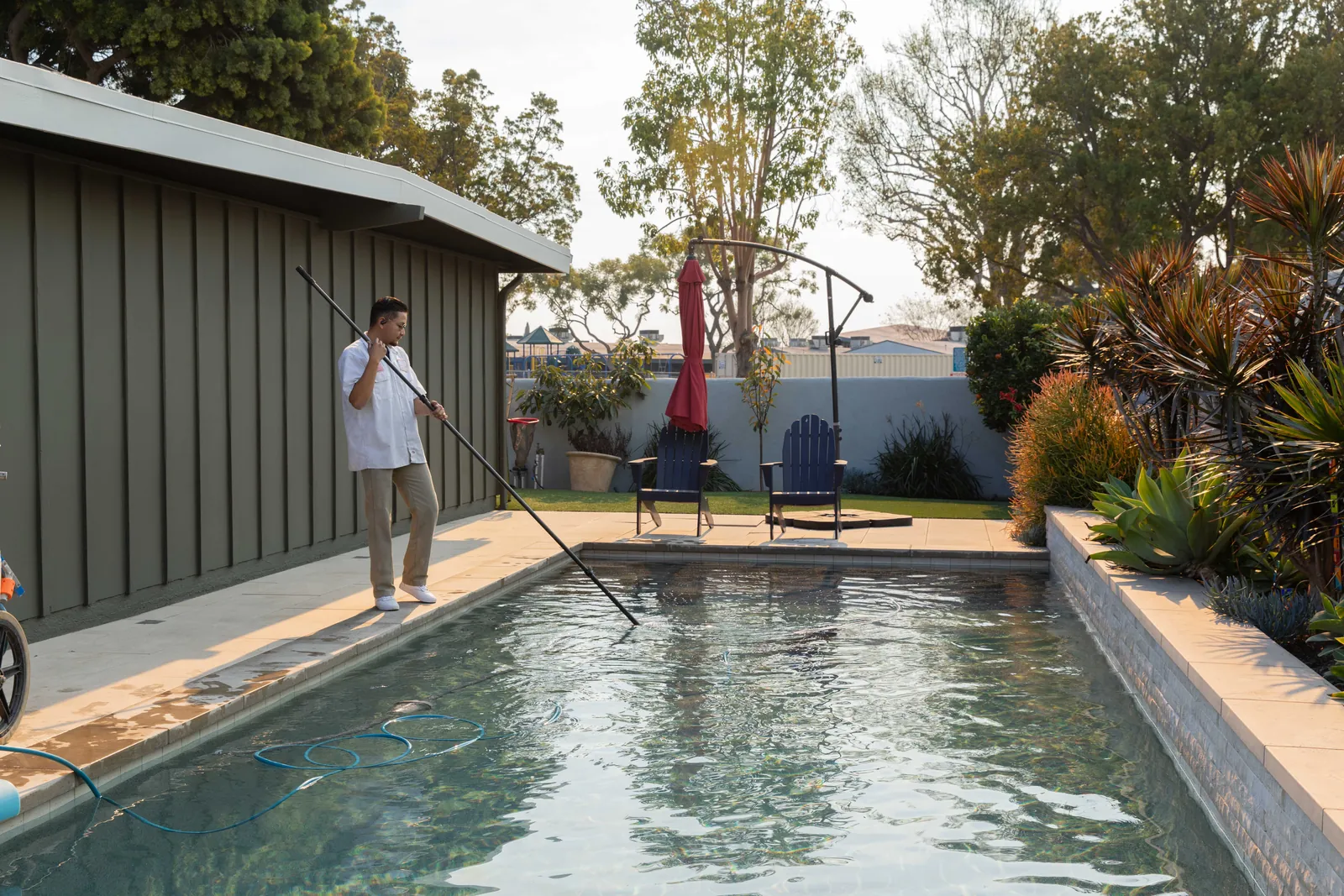
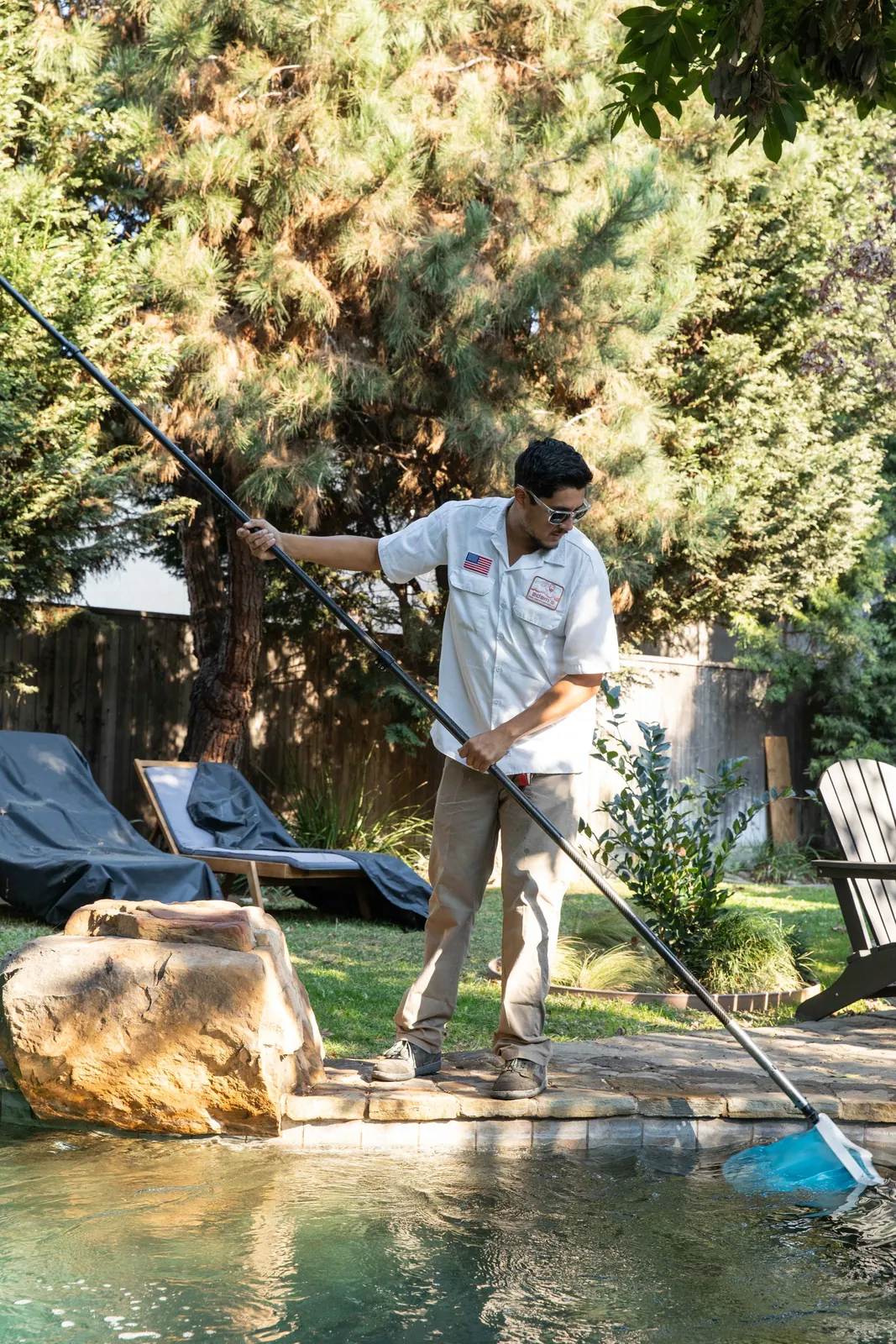
Person in light-colored shirt using long-handled skimmer net to clean pool water, with large rocks and green plants visible.

Here's the full green-to-clean protocol. Do these in order.

Skim and net out debris

Leaves and bugs on the surface create chlorine demand. Clear them first.

Test the water

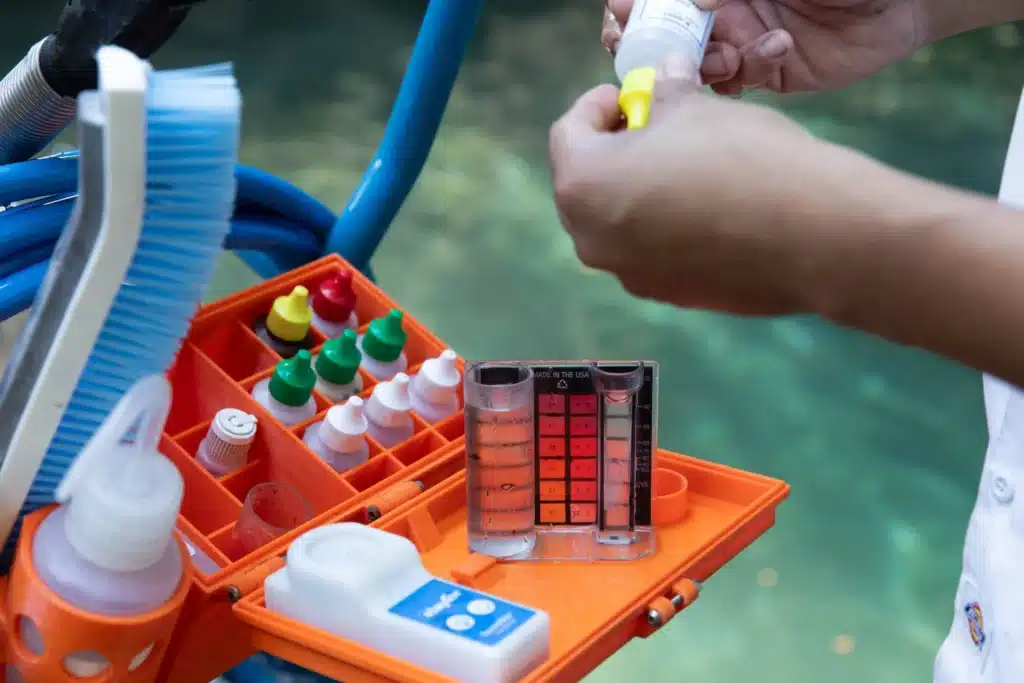
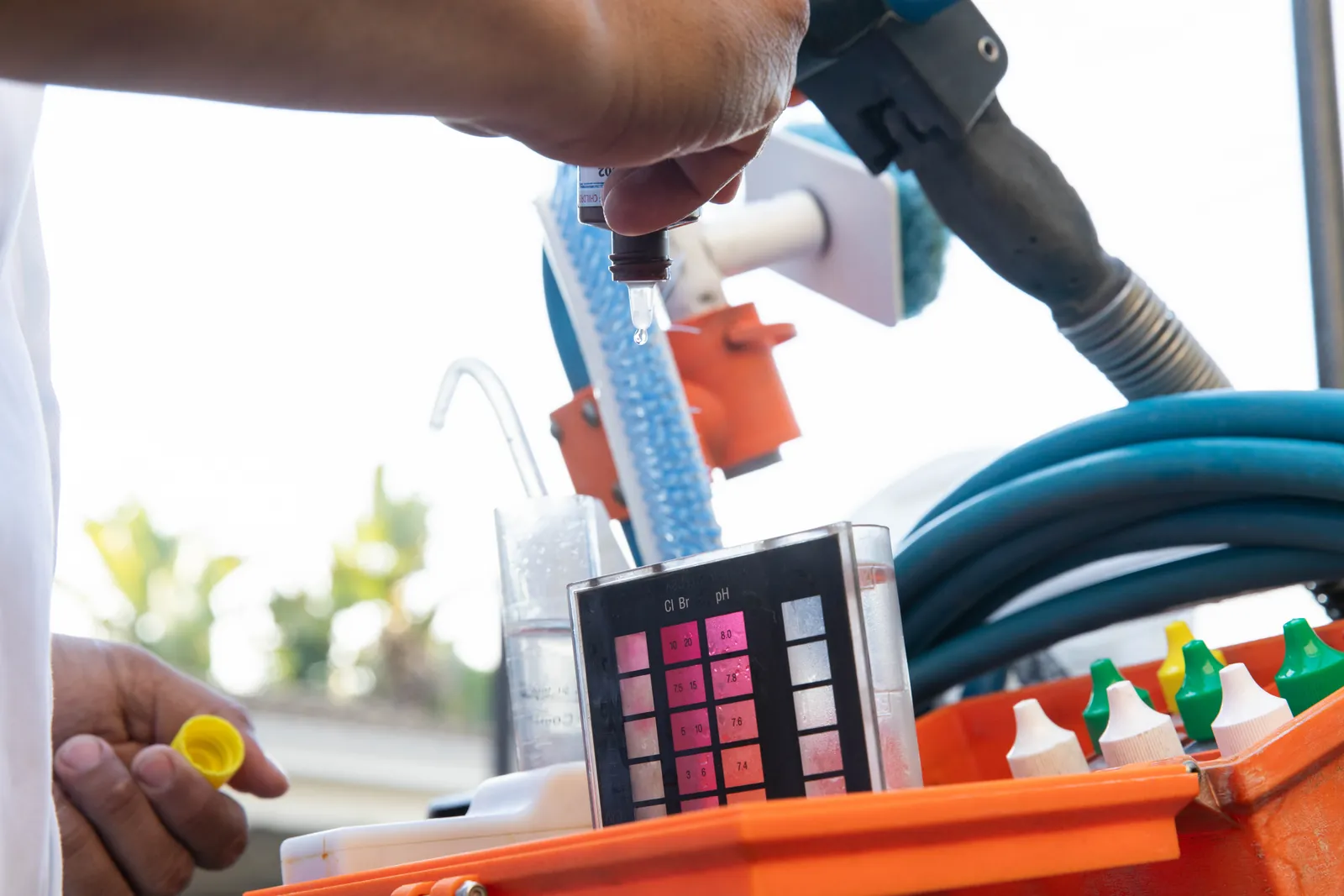
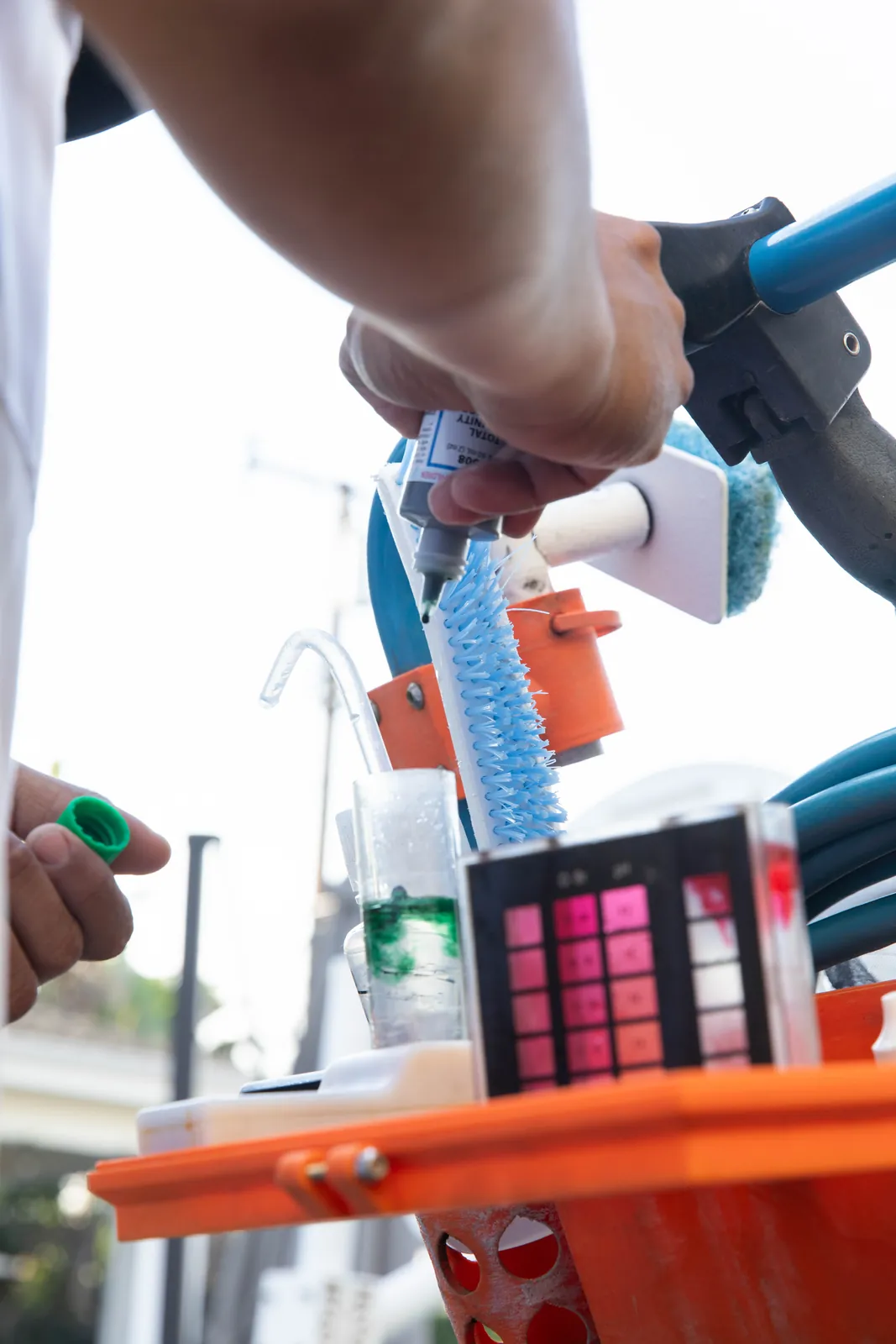
Measure free chlorine, pH, total alkalinity, CYA, and calcium. Write the numbers down. If CYA is above 80 ppm, you need a partial drain before the shock will work.

Lower pH to 7.2-7.4

Chlorine is roughly twice as effective at pH 7.2 as it is at 7.8. Use muriatic acid or dry acid per label dose. See our how to lower pH in pool guide for the full process.

Clean the filter

Backwash a sand or DE filter, hose off cartridges. A filter choked with last week's debris can't clear a green pool.

Brush every surface aggressively

Walls, floor, steps, behind the ladder, around the light niche. Brushing breaks algae off surfaces so shock can reach it. Skip this step and the green will come back within days.

Shock the pool hard

Calcium hypochlorite at 2-3x the normal shock dose, or enough to reach at least 10 ppm free chlorine. For heavy blooms, "triple shock" (3x dose). Add at dusk.

Run the pump 24/7

This is non-negotiable. Algae clears through brushing + shock + filtration working together. Shut the pump off at night and you lose days of progress.

Brush again in 12 hours

Re-suspend anything the shock knocked loose.

Add algaecide

only after the initial shock has brought chlorine to 10+ ppm. Polyquat 60 is the cleanest option. Don't use copper-based algaecides on a pool that might already have metals.

Vacuum to waste

Dead algae and debris settle on the bottom. Vacuum it out through the "waste" port on a multiport valve, not back through the filter.

Retest and rebalance

Once the water clears, bring chlorine back to 1-3 ppm, pH to 7.4-7.6, alkalinity to 80-120 ppm, and CYA to 30-50 ppm.

How long does it take to clear a green pool?

Depends on severity.

Stage Description Typical clear time
Tinted Light green, water still clear 12-24 hours
Green Obviously green, can see bottom faintly 2-3 days
Cloudy green Can't see beyond 1-2 feet 3-5 days
Swamp green Opaque, walls invisible, black growth 5-10 days or professional intervention

These timelines assume the pump runs continuously, chemistry is correct, and you brush daily. If you cut any of those corners, double the numbers.

Why is my pool still green after shocking?

This is the most common follow-up call we get. Usual suspects:

CYA lockout. Stabilizer above 80-100 ppm binds chlorine and makes even heavy shock ineffective. The only real fix is a partial drain (30-50% water swap) to dilute CYA, then restart the process.
pH too high. If pH is still 7.8 or above, the shock you added never activated. Drop pH first, shock second.
Weak or old shock. Cal hypo loses strength if stored in heat or humidity. A bag that's sat in the garage for two seasons isn't what's on the label anymore.
Not enough shock. Heavy blooms need 2-3x the "normal" dose. Undershooting is the #1 DIY mistake.
Not brushing. Algae on walls is shielded from chlorine until you physically knock it loose.
Pump running too few hours. 8 hours a day isn't enough for a green pool. You need 24/7 until it clears.
Mustard or black algae. These resist normal chlorine and need specialty treatment. Mustard algae calls for quad-shock and extra attention to shaded walls. Black algae needs a stiff wire brush (plaster only) and direct shock paste application to each spot.
It's not algae at all. Metal staining, pollen, or extreme cloudiness can look green. If chlorine is 10+ ppm and the water is clear but tinted, it's metals, not algae.

Why is my saltwater pool green?

Saltwater pools turn green for the same core reasons standard pools do, plus a few that are specific to SWG systems.

Salt cell scaled or dying. A 3-5 year old cell may be generating half the chlorine it used to, even with the same setting. Check for scale deposits and test actual output.
SWG run time too short. The cell only generates chlorine when the pump is running. Short run times create chlorine debt.
High pH from electrolysis. Salt cells naturally drive pH up over time. If you're not dosing acid regularly, pH creeps up and chlorine stops working.
Salt level too low. Most cells need 2,700-3,400 ppm salt to produce properly. Below that, output drops even if the display looks normal.
CYA too low or too high. Saltwater pools still need stabilizer, typically in the 60-80 ppm range. Too low and the generated chlorine burns off in the sun. Too high and you're in lockout.

Should you drain a green pool?

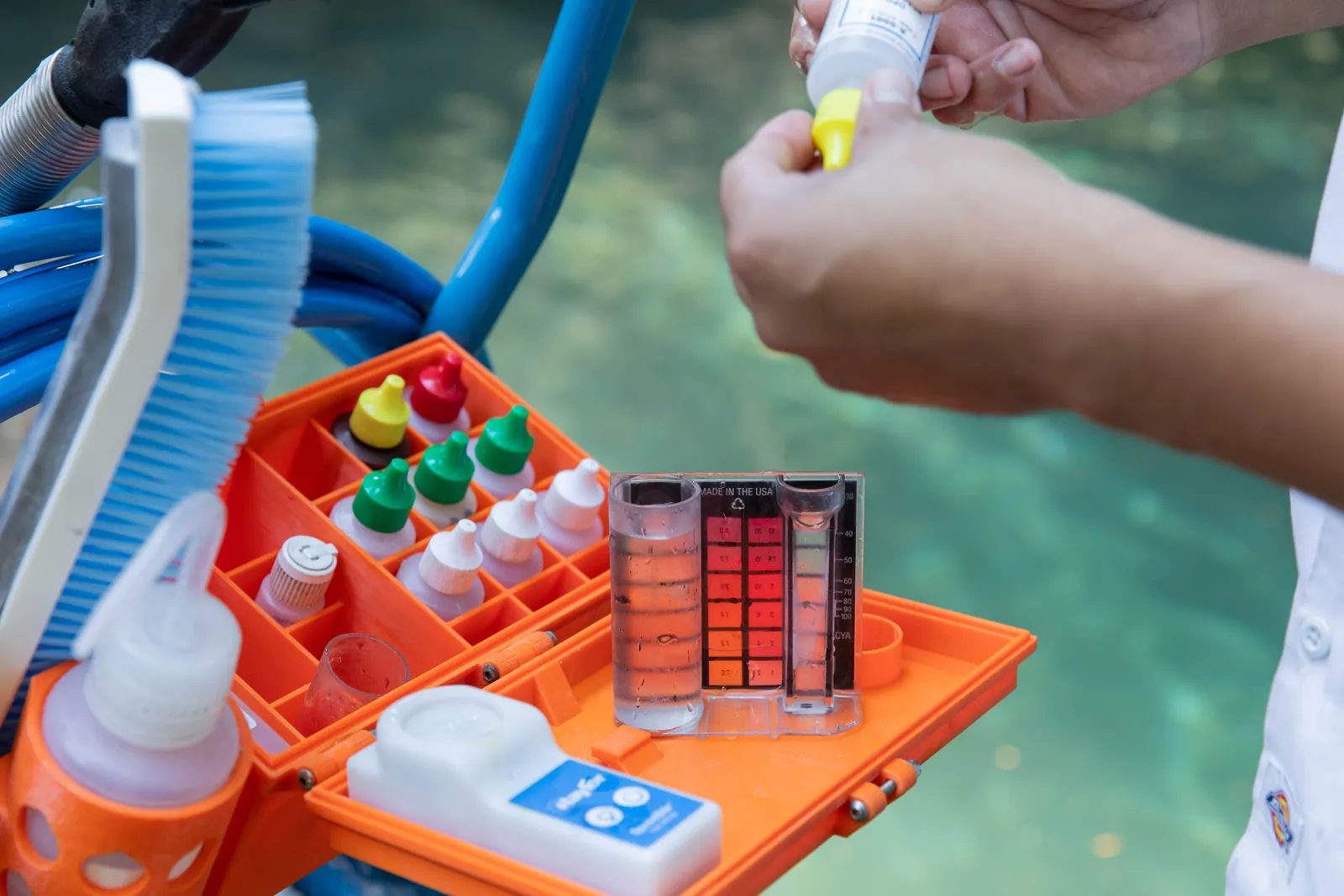
Child's hand holding yellow tablet over orange pool testing kit with blue brush and hose in background.

Rarely. Draining is expensive, wastes water (a real issue in California), and in some pool types it's dangerous: plaster pools can crack if empty in hot weather, and vinyl liners can shift. Fiberglass shells can even float out of the ground if you drain them with a high water table.

Drain or partially drain only when:

CYA is above 100 ppm (dilution is the only way to lower it)
Total dissolved solids are above 3,000 ppm
Calcium hardness is above 600 ppm
The pool has been abandoned for months and the shell is covered in black growth

When to call a pool professional

Call a pro (or skip the DIY and call us first) when:

The pool is opaque swamp green and you can't see the bottom
It's been green for more than 2 weeks
Black algae is visible in the plaster
CYA tests above 100 ppm
You've already spent $150+ on shock and algaecide with no result
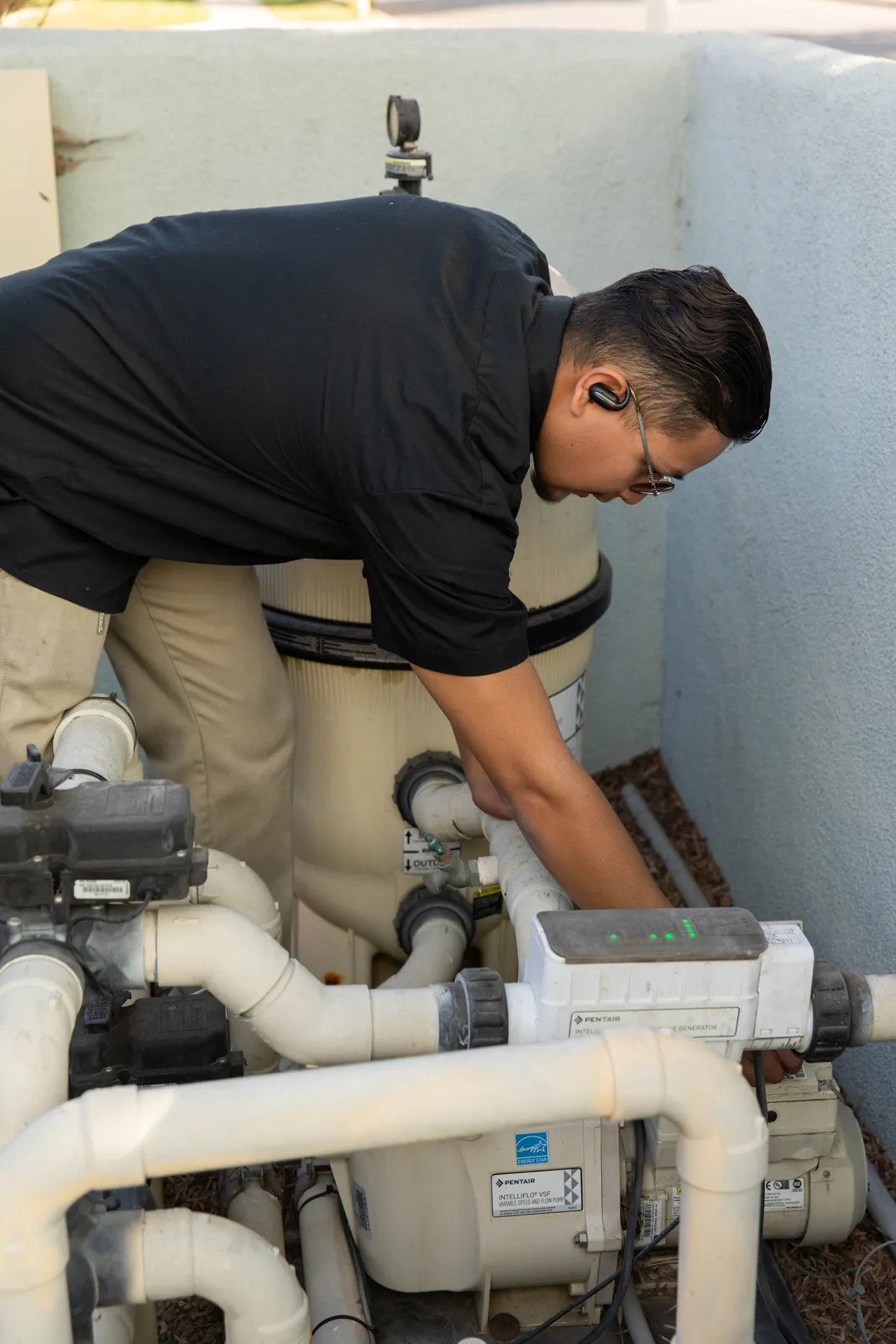
A heater, salt cell, or filter is already failing
You're selling the house and need it clear by the weekend
FAQ

Green pool FAQs

Can I just dump a bunch of chlorine in and wait?

No. High pH will neutralize most of it, CYA lockout will bind it, and without brushing and filtration you're just killing surface algae while the walls keep blooming. The process is the process.

How much shock do I need for a green pool?

Triple the normal dose as a starting point. For a 15,000 gallon pool, that's roughly 3 pounds of calcium hypochlorite. Very heavy blooms may need quad shock.

Will algaecide alone clear a green pool?

Rarely. Algaecides are best used for prevention and mopping up after a shock treatment. They're not a substitute for chlorine on an active bloom.

Why does my pool turn green every summer?

Usually one of three things: CYA is climbing from constant trichlor use, your pump run time is too short for summer heat, or your filter needs service. Fix the root cause instead of re-shocking every July.

Can I swim the day after shocking a green pool?

Wait until free chlorine drops back to 3 ppm or below and the water is visibly clear. That's usually 24-48 hours after a successful shock.

Is a green pool worse than a cloudy pool?

Usually yes, because green means active algae plus low sanitizer. A cloudy pool can be a pure filtration issue; a green pool almost always involves chemistry failure too.

Get your green pool clear, fast

Green water is one of the most fixable pool problems once you know the cause. Low chlorine, high pH, CYA lockout, or a starving filter: each has a specific fix, and most cases clear within a few days. What they all share is the same process: balance chemistry, shock hard, brush everything, run the filter non-stop, and be patient.

If you'd rather have it handled, Adams Pool & Spa runs same-week emergency green-to-clean visits across Long Beach and the surrounding cities. Call (562) 439-2693 and we'll tell you what you're actually dealing with before we put a single chemical in the water.

Green Pool Reference

Terms behind a green pool

Algae blooms when sanitizer drops or pH drifts. Three terms behind the green-pool diagnosis.

Algae

Photosynthetic organisms that bloom in pool water when sanitizer drops. Green pools, black-spot stains, and yellow-mustard cling are all algae problems we treat with shock chlorination plus algaecide.

Wikipedia ↗ · Wikidata ↗

Chlorine

The most common pool sanitizer, dosed as liquid, tablet, or generated on-site by a salt cell. Free chlorine in the 1 to 3 ppm range keeps a residential pool sanitary.

Wikipedia ↗ · Wikidata ↗

pH

The acid-base balance of pool water, measured 0 to 14. We hold residential pools between 7.4 and 7.6, where chlorine is most effective and plaster surfaces don't etch.

Wikipedia ↗ · Wikidata ↗