In this guide
- Why is my pool cloudy?
- Is it safe to swim in a cloudy pool?
- What actually causes cloudy pool water?
- Step-by-step: how to clear a cloudy pool fast
- Why is my pool cloudy after it rains?
- Why is my pool cloudy after shocking?
- Why is my pool cloudy but the chemicals look fine?
- Pool clarifier vs pool flocculant: which should you use?
- How long does it take to clear a cloudy pool?
- When DIY won't cut it
- Cloudy pool FAQs
- Get your pool crystal clear, fast
- Terms behind the cloudy-pool diagnosis
Milky water, hazy tint, can't see the bottom step: cloudy pool water is the most common emergency call a pool service company gets, and it almost always traces to one of three fixable problems. Between poor filtration, unbalanced chemistry, and contaminants like pollen or runoff, most cloudy pools clear up within 24-48 hours once you diagnose the right cause and run the filter hard. This guide from Adam's Pool and Spa Service walks through the top causes, a step-by-step fix process, when to use a clarifier versus a flocculant, and why some cloudy pools need a pro.
Is it safe to swim in a cloudy pool?
No. A cloudy pool is both a safety risk and a water quality problem. Cloudiness means the chlorine probably isn't sanitizing properly, so bacteria and early-stage algae are multiplying. It also means a swimmer in trouble on the bottom of the pool can't be seen from the deck, which the CDC lists as a drowning risk factor for residential pools.
Stay out until you can see a coin on the deep-end floor. Then test free chlorine, combined chlorine, pH, and alkalinity before letting anyone back in.
What actually causes cloudy pool water?
Pool water has three systems that have to work together: filtration, chemistry, and circulation. When any one of them fails, suspended particles accumulate faster than they can be removed, and the water turns cloudy.
Poor filtration
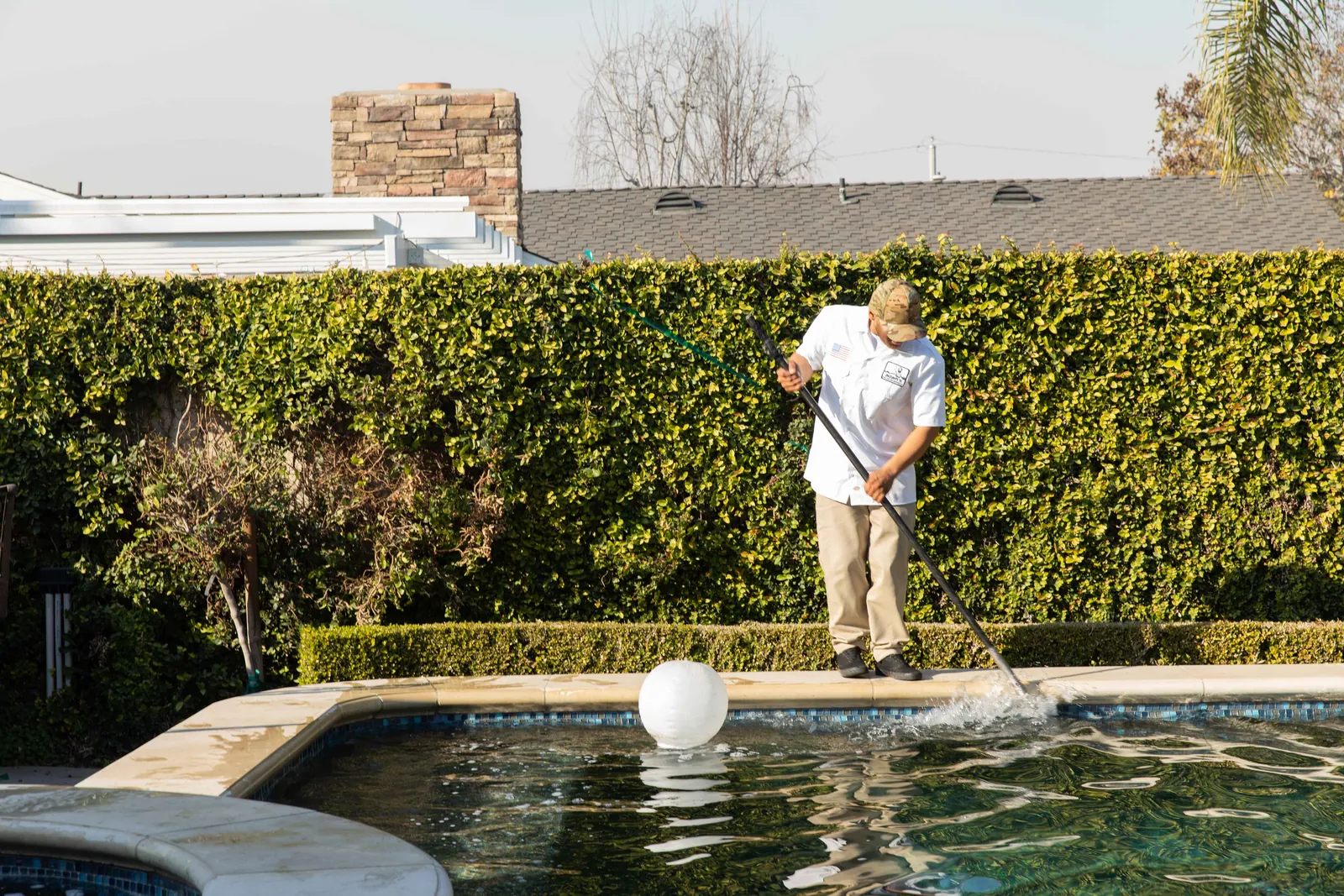
The number one cause. If your filter is clogged, the pump is undersized, or the run time is too short, the filter physically can't pull particles out of the water fast enough.
- Clogged filter: sand, DE, and cartridge filters all need periodic cleaning. A pressure gauge reading 8-10 psi above clean baseline means clean it now.
- Short run time: a residential pool needs one full turnover per day, minimum. In Long Beach heat and sun, that often means 8-10 hours of pump run time, and more in peak summer, depending on pool size and pump flow.
- Undersized or failing pump: a pump that's lost prime, has worn impellers, or is too small for the pool volume can't keep up.
- Dirty or bypassed skimmer basket: debris that should be caught early ends up in the filter instead.
Unbalanced water chemistry
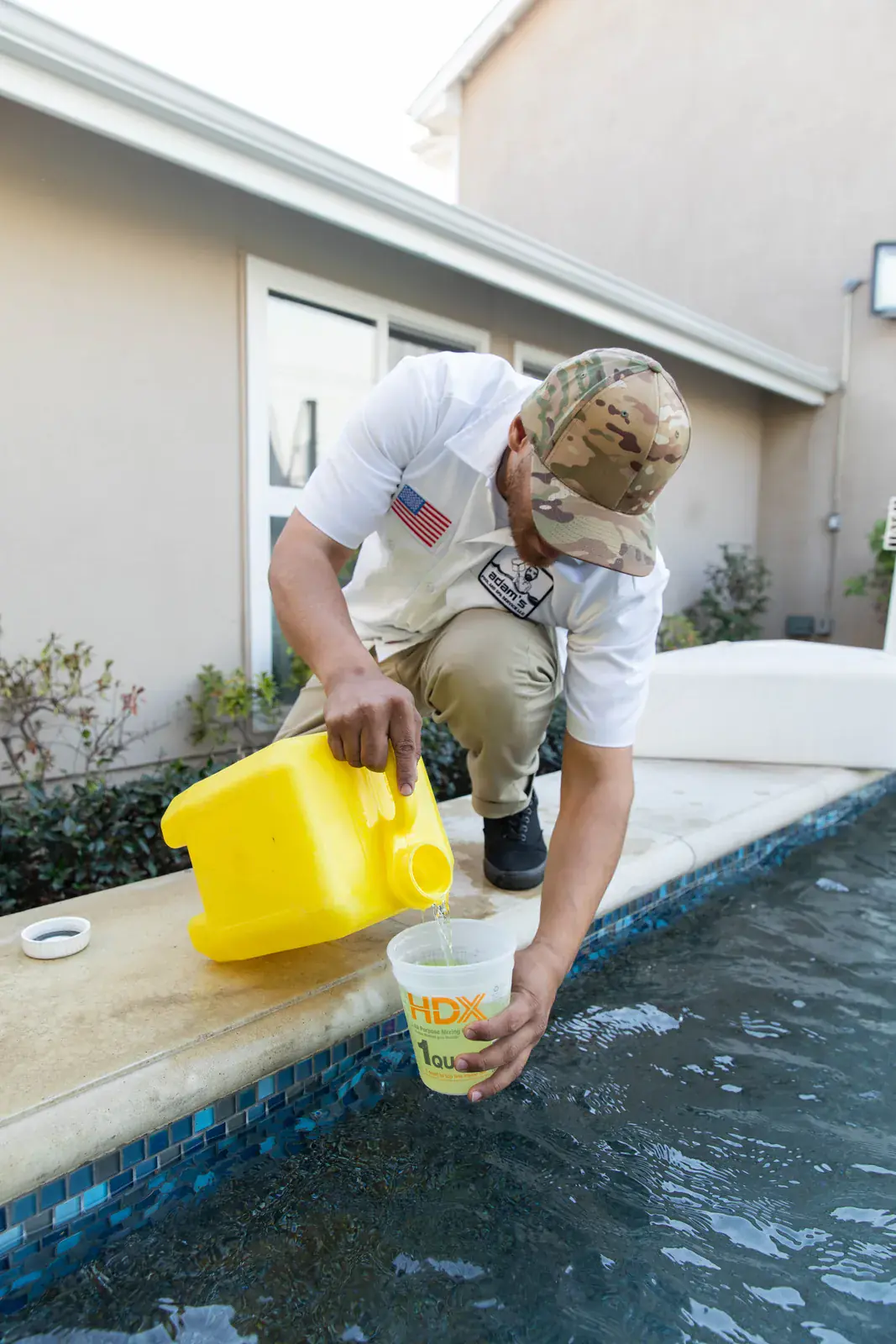
Chemistry problems that cause cloudiness:
- Low free chlorine (under 1 ppm) lets micro-contaminants and early algae bloom
- High pH (above 7.8) makes chlorine ineffective and precipitates calcium
- High total alkalinity (above 120 ppm) locks pH up high
- High calcium hardness (above 400 ppm) causes calcium scale, especially in SoCal's hard tap water
- Low calcium hardness pulls minerals out of plaster and turns water cloudy-white
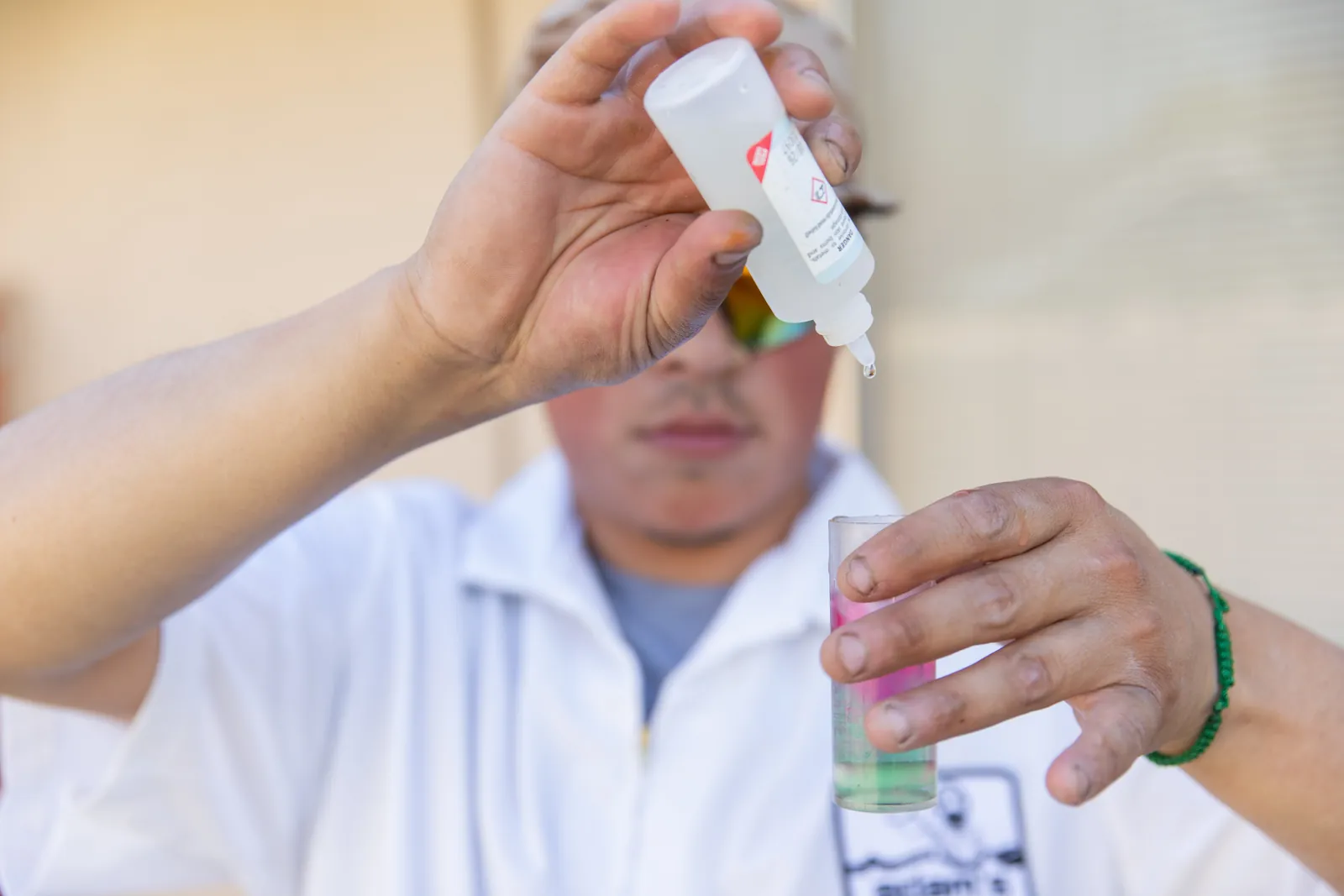
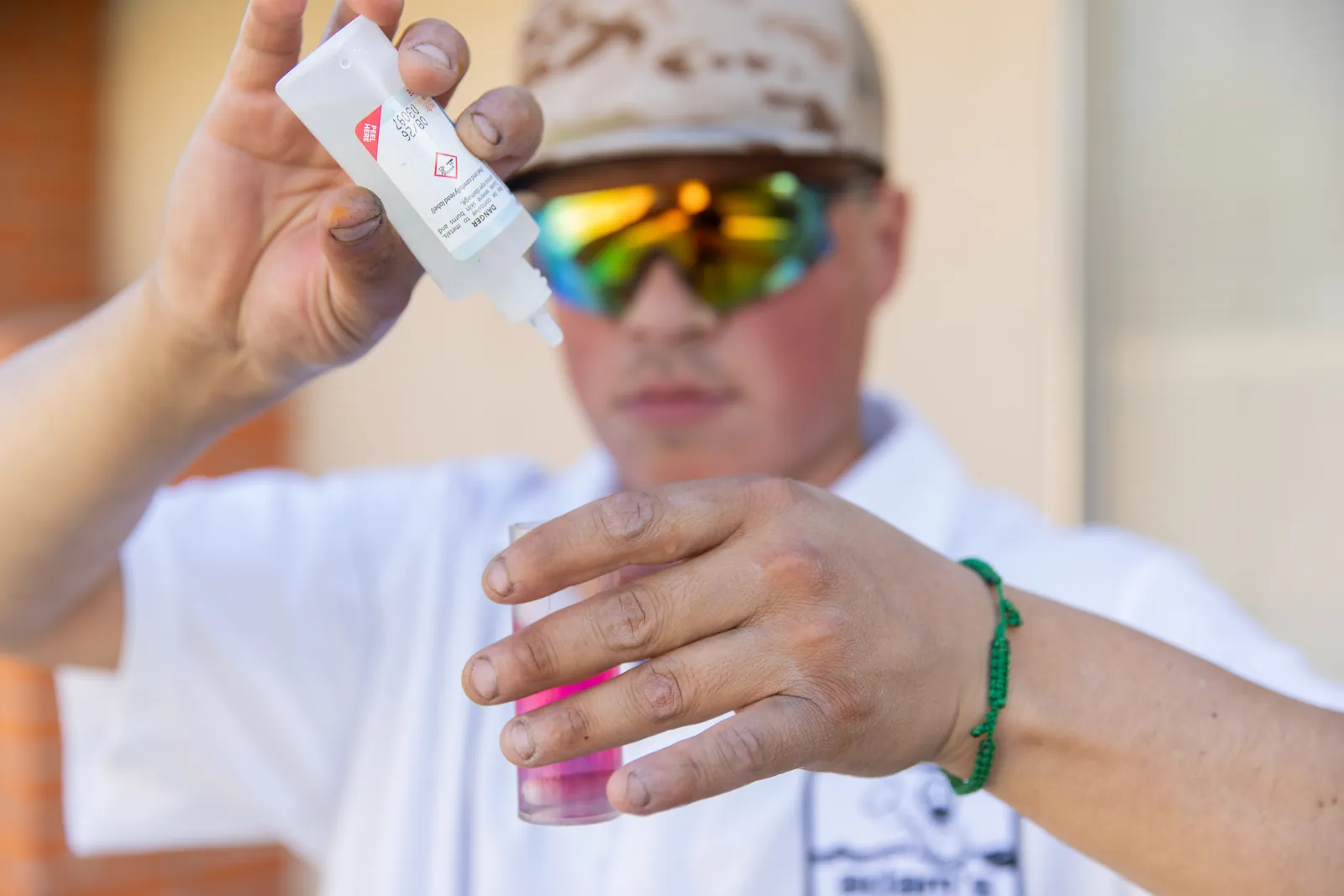
A drop-based DPD test kit (or a Taylor K-2006) gives you accurate readings. Skip the cheap test strips for this diagnosis. If you want the full breakdown of chlorine chemistry, see our pool chlorine levels guide.
Contaminants
The sneaky third cause:
- Pollen (huge in spring across LA County)
- Sunscreen, lotion, sweat, and body oil
- Dust from wildfires or Santa Ana winds
- Organic debris from leaves and grass
- Runoff after a storm
- Early-stage algae (before it's green)
Contaminants create instant chlorine demand. You can have "correct" chlorine on the test one morning and a cloudy pool by evening because contaminants burned through it.
Step-by-step: how to clear a cloudy pool fast
Follow this order. Skipping steps is the reason most DIY fixes fail.
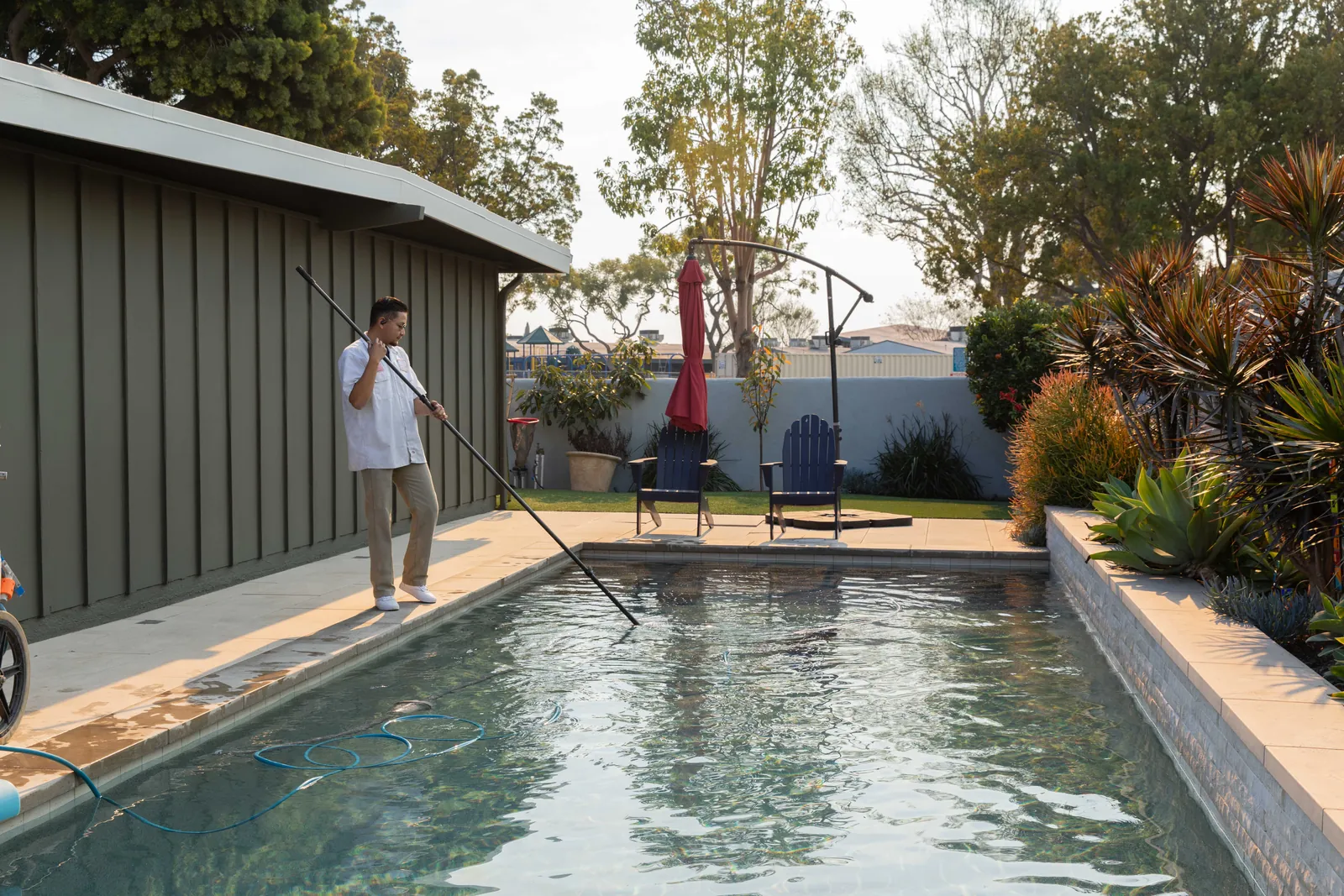
Remove surface debris, brush walls and floor to lift settled particles, and vacuum what you can. Use the "waste" setting on a multiport valve if you have a sand or DE filter and the water is badly clouded.
A clogged filter can't do its job. Backwash sand or DE filters until the sight glass runs clear, then recharge DE. Cartridge owners, hose the pleats off. Badly fouled cartridges may need a chemical soak or replacement. See our pool filter cleaning service if you're not sure how to service yours.
Measure free chlorine, combined chlorine, pH, total alkalinity, calcium hardness, and CYA. Write the numbers down.
Adjust pH to 7.4-7.6 before doing anything else. Then bring alkalinity into 80-120 ppm range. Calcium and CYA take longer to correct and can wait a day.
Use calcium hypochlorite shock at the label dose, or liquid chlorine if you have hard water already. Shock at dusk so UV doesn't eat it.
until water clears. This is the biggest single move. Most cloudy pools don't clear because people shut the pump off overnight.
if the water's still hazy after 24 hours of continuous filtration. Clarifier coagulates fine particles so the filter can catch them.
Check chemistry again once the water's clear and top up chlorine.
Why is my pool cloudy after it rains?
Heavy rain does three things that turn a clear pool cloudy within hours:
Why is my pool cloudy after shocking?
Cloudiness right after shocking is actually normal for 2-12 hours. Calcium hypochlorite adds calcium to the water, and liquid chlorine briefly raises pH. Both can precipitate minerals and create a temporary haze.
If the water's still cloudy 24 hours after shocking:
Why is my pool cloudy but the chemicals look fine?
This is the frustrating one. Chlorine reads 2 ppm, pH is 7.5, and the pool still looks like skim milk. Common explanations:
Pool clarifier vs pool flocculant: which should you use?
Both products group suspended particles together so they can be removed, but the mechanism is different.
Pool clarifier:
How long does it take to clear a cloudy pool?
Typical timelines assuming you follow the full process:
| Severity | Expected clear time |
|---|---|
| Slightly hazy, can see bottom | 12-24 hours |
| Cloudy, can't see deep end | 24-48 hours |
| Milky, can't see beyond 2 feet | 48-72 hours |
| Green-tinted cloudy (algae onset) | 3-5 days |
Running the filter 24/7 is what actually determines the timeline. Chemistry and clarifier set the stage, but filtration does the work. If you shut the pump off at night, double the numbers above.
When DIY won't cut it
Call a pool professional when:
Cloudy pool FAQs
Can I shock a pool twice in one day?
Yes, if the first dose didn't raise free chlorine enough. Wait a few hours, retest, and add more if needed. Don't dump huge amounts of shock at once because that can damage liners and surfaces.
Does baking soda clear a cloudy pool?
Only if high alkalinity isn't already the problem. Baking soda raises total alkalinity and nudges pH up, which helps a pool that's too acidic. It does nothing for a pool that's cloudy from filtration or calcium.
Will a cloudy pool clear on its own?
Sometimes, if the cause is mild (pollen, a little rain runoff) and the filter is healthy. Most of the time, no. Ignoring it for a week usually turns cloudy into green.
Why is my saltwater pool cloudy?
Same causes as a regular pool. The SWG may not be generating enough chlorine, salt level may be off, or pH has crept up from electrolysis. Test chemistry and check the cell for scaling.
Can I use a hair conditioner or other home remedy to clear cloudy water?
No. Home remedies range from useless to damaging. Stick with products designed for pools.
Get your pool crystal clear, fast
Cloudy pool water isn't a mystery. It's filtration, chemistry, or contaminants, and the right diagnosis beats blindly adding products every time. Follow the step-by-step fix above and most pools clear within 48 hours. If yours doesn't, something mechanical or chemical is off, and that's where a pro matters.
Adam's Pool and Spa Service serves Long Beach and the surrounding areas with same-week cloudy-pool visits, full chemistry diagnosis, and filter service. Call (562) 522-2203 and we'll get the water clear before the weekend.
Terms behind the cloudy-pool diagnosis
Cloudy water is usually one of three things: chemistry buffering, filter performance, or stabilizer overload.
- Alkalinity
-
Total alkalinity is the buffering capacity of pool water against pH swings. Held between 80 and 120 ppm, it stops chemistry from rising or falling on every dose.
- Cartridge filter
-
A pool filter using replaceable pleated cartridges as the filtration medium. Rinsed quarterly, deep-soaked annually, replaced every 3 to 5 years. The most common modern residential filter.
- Cyanuric acid
-
A chlorine stabilizer that protects free chlorine from UV degradation in outdoor pools. Held between 30 and 50 ppm in residential Long Beach pools; over 80 ppm chlorine becomes ineffective.