In this guide
Pool tile repair usually means fixing one of two problems: tile that's loose or cracked, or white calcium scale building up on the waterline. Scale is a water chemistry problem you can often slow down yourself. Loose or cracked tile needs a pro, because the cause is often behind the tile.
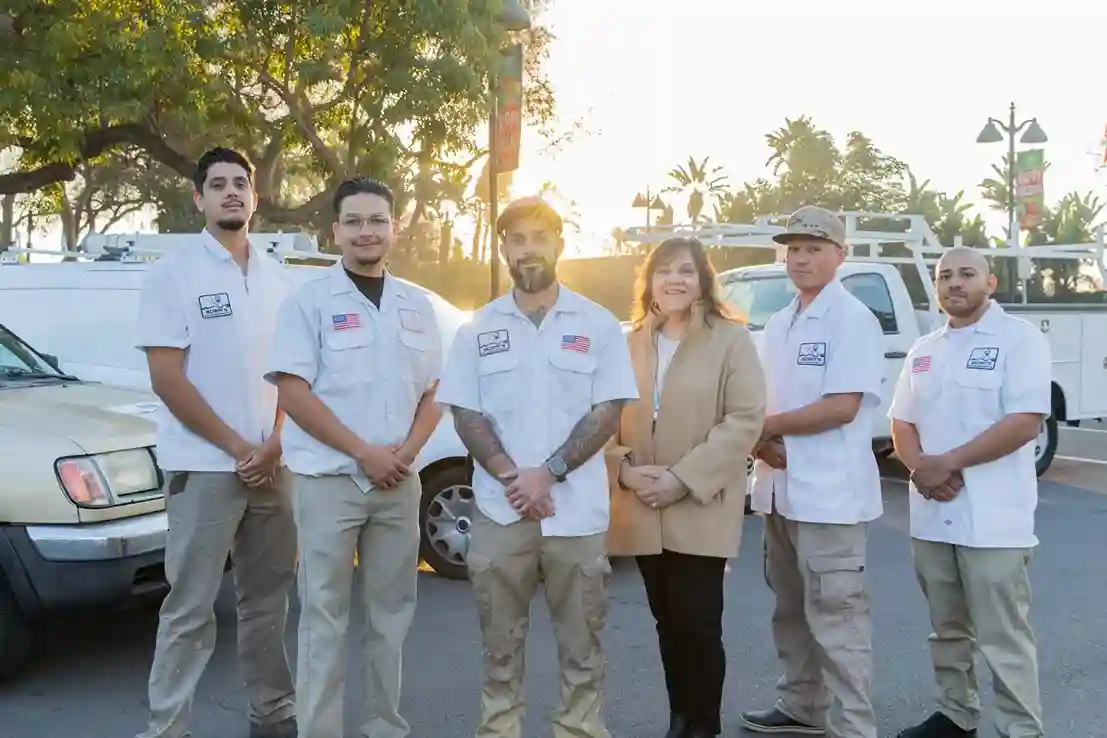
I'm Adam, owner and lead technician at Adam's Pool & Spa in Long Beach. I'm Jandy Certified and a Pentair Expert Installer, and tile is one of the first things I look at on any pool. This post explains what's going on with your tile. Our pool tile repair service page covers how we fix it.
Loose tile or calcium scale
The two problems look different and need different fixes. Use this table to sort out which one you have.
| What you see | Likely cause | Who should fix it |
|---|---|---|
| White or gray crust at the waterline | Calcium scale | Owner for light scale, pro for heavy |
| Rough white spots that won't brush off | Older, bonded scale | Pro |
| A tile that moves or sounds hollow | Failed bond behind the tile | Pro |
| Cracked tile in a straight line | Movement in the shell or bond beam | Pro |
| Missing grout between tiles | Worn grout or water chemistry | Pro |
If you see cracks running across several tiles, have them checked soon. A straight crack can follow movement underneath, which is worth catching early.
How to remove calcium scale safely
Start gentle and stop if the tile shows scratches. These steps cover light scale on ceramic or porcelain tile.
- Lower the water a few inches. Expose the scale line so you can see it.
- Test a small spot. Use a tile-safe scale remover and a nylon brush first.
- Work in short sections. Rinse each section as you go.
- Skip abrasive tools on glass tile. Glass and mosaic scratch easily.
- Rebalance the water. Refill and bring pH and calcium back into range.
If the scale won't budge, stop there. Bead blasting removes heavy scale without etching the tile face, and it's the method we try first.
Pool tile and acid safety
Muriatic acid can remove scale, but it also etches some glazes and plaster. A CDC release on pool chemical injuries estimated 4,535 U.S. emergency visits a year from pool chemicals during 2008 to 2017.
Follow these rules if acid is part of the job:
- Wear the eye, hand, and breathing protection the label calls for.
- Add acid to water, never water to acid.
- Never mix acid with chlorine. The CDC calls that combination especially dangerous.
- Keep kids and pets well away from the work.
A full acid wash is a different job that strips plaster across the whole pool. Our post on what a pool acid wash does explains when it helps.
How to keep scale off your pool tile
Steady chemistry slows scale down. Pentair's IntelliChlor manual lists pH of 7.2 to 7.8 and calcium hardness of 200 to 300 ppm. It says those ranges help prevent corrosion and liming. Keep both in that range between visits.
These habits help between visits:
- Test pH and calcium hardness on a regular schedule
- Keep pH from drifting high, since high pH speeds up scale
- Brush the waterline tile weekly before scale bonds
Our guide on how to lower pH in a pool covers the most common fix.
What happens on a pool tile repair visit
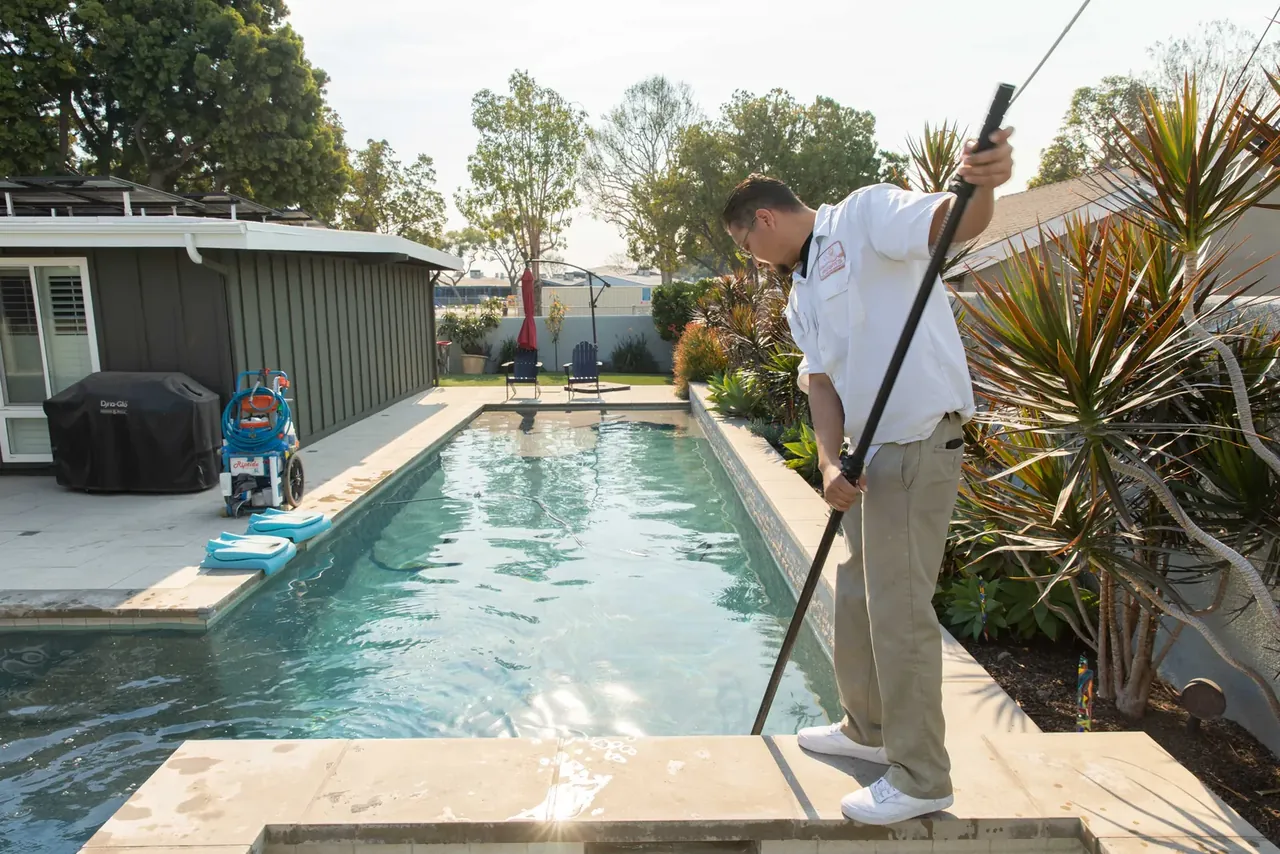
A tile visit starts with a look at every tile surface, including the ones you may not have noticed. This is the order we follow:
- Check the water chemistry. Scale that keeps returning points back to pH and calcium.
- Inspect the tile and the scale. Glass, mosaic, and glazed tile each need a different method.
- Test the tile you stand on. Steps, benches, and spa edges get checked for loose tile.
- Remove scale. Bead blasting comes first on most pools, with acid saved for heavy scale.
- Reset or replace loose tile. Use pool-grade setting material on a clean, sound surface.
Loose tile on a step or bench is more than a looks problem. A sharp or shifting edge underfoot is worth fixing soon.
When tile repair means a bigger job
Sometimes the tile is a sign of something larger. Widespread loose tile, a cracked bond beam, or tile that fails again after a reset can all point there.
If the pool is due for a new interior finish anyway, it often makes sense to replace the waterline tile at the same time. The water is already down and the crew is already there. Our pool resurfacing page explains that process.
The questions Long Beach pool owners ask most about pool tile repair, answered plainly.
Want your pool tile checked?
Scale and loose tile are both easier to fix early. At Adam's Pool & Spa, we check the waterline, steps, benches, and spa tile. Then we tell you whether it needs cleaning, a reset, or replacement. We work across Long Beach and nearby neighborhoods, and we won't push a bigger job than your pool needs. Reach out through our contact page to set up a visit.
Adam is the founder, owner, and lead technician of Adam's Pool & Spa, working on pools in Long Beach and nearby LA County for about fifteen years. He is Jandy Certified and a Pentair Expert Installer, and he built the business on education-first, anti-pressure service, including the "Pool School" session each new client gets.
Frequently asked questions
What is the white buildup on my pool tile?
Usually calcium scale. Water evaporates at the waterline and leaves dissolved minerals behind on the tile. The U.S. Geological Survey defines water hardness as the amount of dissolved calcium and magnesium, and hard water leaves more of it. High pH and high calcium make scale form faster.
How do you remove calcium scale from pool tile?
Light scale on ceramic or porcelain tile can often come off with a tile-safe scale remover and a nylon brush. Heavier scale usually needs bead blasting, which strips calcium without etching the tile face. Glass and mosaic tile need a gentler method, so check with a pro before you scrub.
Can I fix a loose pool tile myself?
It's possible on a single tile above the waterline, but most owners are better off calling a pro. Pool tile needs a pool-grade setting material and a dry, sound surface behind it. Several loose tiles in a row can point to a problem behind the tile, which needs a closer look.
Do I need to drain the pool to repair tile?
Not always. Waterline scale removal and some tile resets can be done with the water lowered just below the tile line. Tile deeper in the pool, or a full waterline replacement, usually means draining more.
Should I acid wash my pool to clean the tile?
Usually not as a first step. An acid wash strips a layer of plaster across the whole pool, and acid can etch some tile glazes. Bead blasting targets the scale on the tile itself. Acid is best saved for heavy scale that other methods can't reach.