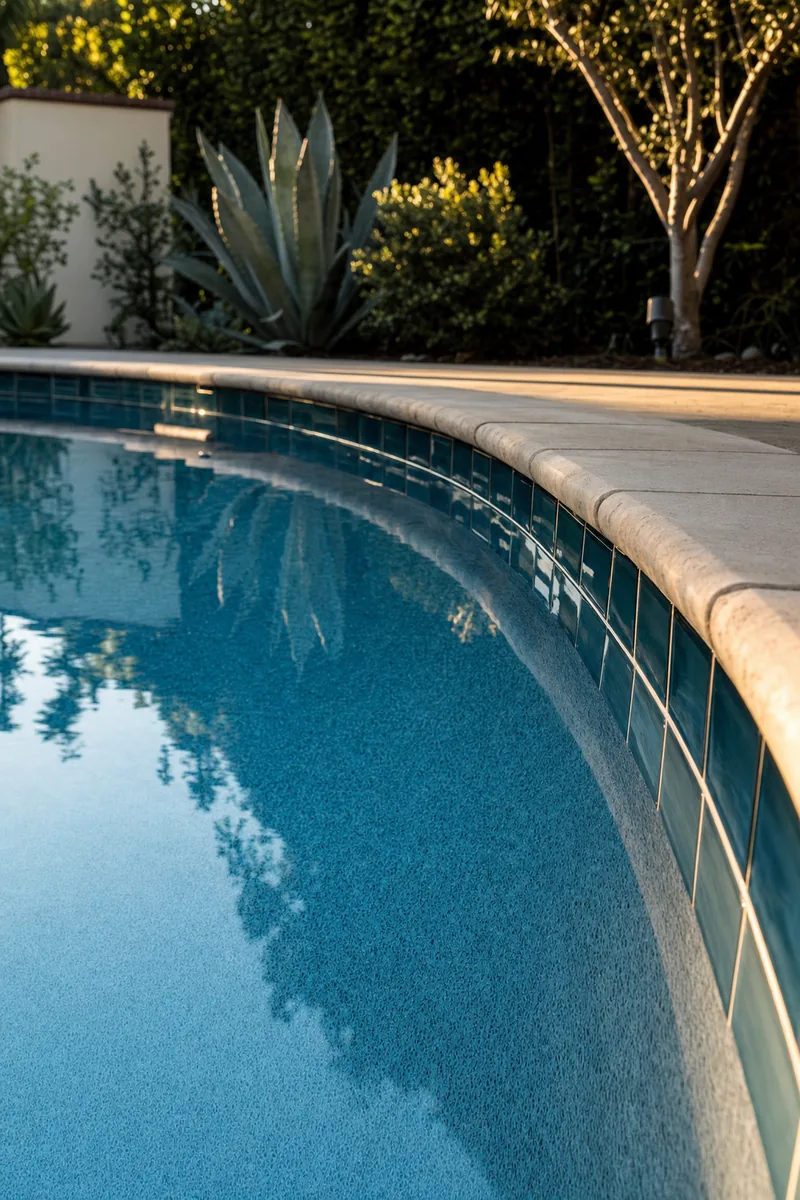
I'm Adam, owner and lead technician at Adam's Pool & Spa. I've spent about fifteen years building and resurfacing pools across Long Beach and LA County, and more of that work lately has taken me into the South Bay, from the Sand Section of Manhattan Beach down to Riviera Village in Redondo. The question I hear most before a resurface is a good one. Plaster, pebble, or quartz? Here is how the three finishes really compare, and how to choose the one that fits your pool and the way you actually swim.
What a pool finish is, and why it eventually wears out
Your pool's finish is the interior surface, the layer you see and touch every time you get in. It seals the shell, it gives the water its color, and it sets how the pool feels underfoot. When people picture that bright blue water or a deep natural lagoon look, they are really picturing the finish.
No finish lasts forever, and that is normal. Sun, water chemistry, and simple age all work on it over the years. You start to feel rough patches on the steps, see stains or mottling that will not scrub off, or notice the surface going chalky and thin enough that the aggregate underneath shows through. Down here near the coast, salt air off the water and the hard tap water across the South Bay tend to move that timeline along a little faster than an inland pool. None of that is a problem to dread. It just means the pool is ready for a refresh, and a resurface is your chance to change the whole look and feel while you are at it. If you are not sure yours is due yet, the signs your pool needs resurfacing are usually easy to spot once you know what to look for.
Plaster: the classic, budget friendly finish
Plaster is the original pool finish, a blend of white cement and marble aggregate troweled smooth over the shell. It is what most older pools in the Tree Section or the Hill Section were built with, and it still has a lot going for it.
The big draw is cost. Plaster is the most affordable finish to install, so it is a smart pick when the budget is tight or you plan to sell the house before too long. It gives you that clean, bright, light blue water everyone pictures, and a fresh white plaster surface feels smooth and gentle on bare feet.
The tradeoff is longevity. In my experience a plaster finish here often gives you somewhere in the range of seven to twelve years before it wants redoing, which is the shortest of the three. It is also the most prone to staining and etching if the water chemistry drifts, and colored plaster in particular can show mottling and blotchiness as it cures and ages. If you love the classic look and value the lower upfront cost, plaster still earns its keep. Just go in knowing you will likely resurface again sooner than with the other two.
Quartz: plaster with a harder, brighter upgrade
Quartz finishes take that same plaster base and blend crushed quartz into it. Quartz is a much harder, denser mineral than marble, and that one change fixes most of plaster's weak spots without jumping all the way to the top of the price ladder.
A quartz surface resists staining and etching noticeably better than standard plaster, so it holds its looks longer and shrugs off the occasional chemistry swing more gracefully. It also opens up a wider, richer range of colors, and the quartz crystals give the water a subtle sparkle in the sun that plain plaster cannot match. It sits right in the middle on price, more than plaster and less than pebble, and it lasts longer than plaster too.
I point a lot of South Bay owners toward quartz when they want an upgrade over builder grade plaster but are not sold on the texture or the cost of pebble. A family pool in East Manhattan or a backyard off Pier Avenue in Hermosa Beach gets a durable, good looking surface that stays smooth underfoot. It is the practical middle ground, and for many pools it is the sweet spot.
Pebble: the most durable, natural looking finish
Pebble finishes mix small natural pebbles into the plaster, and the result is the toughest, longest lasting surface of the three. If you want a finish you can put in once and mostly forget about for a long time, this is the one.
Pebble stands up to hard water, salt systems, and chemistry swings better than anything else, which makes it a strong fit for coastal pools that take a steady dose of salt air rolling in off the Manhattan Beach Pier or sitting up in the breezy Hill Section. It gives you that deep, natural lagoon look, with color options that range from bright Caribbean blues to dark, moody greens and grays. In my experience a good pebble finish can run well past the lifespan of plaster before it needs attention, which is a big part of why owners staying in their forever home lean toward it.
Two honest tradeoffs. First, pebble is the most expensive finish to install, so it asks for the largest upfront investment. Second, the classic pebble texture is a little rougher underfoot than plaster or quartz, which some folks love and some do not. If smoothness matters to you, there are polished and smaller pebble versions that soften the feel a lot while keeping the durability. For a pool near the sand that you plan to enjoy for many years, pebble is usually the best long term value.
How to choose the right finish for your pool
There is no single best finish. The right one comes down to a few honest questions about your pool and your plans.
Start with budget and how long you will stay. If money is tight or you expect to sell your place in the Sand Section within a few years, plaster gets you a fresh, bright pool for the least money. If this is your forever home up near Manhattan Village or over in El Segundo by The Point, pebble's longer life usually pays you back. Quartz is the middle answer when you want more than plaster but not the full pebble investment.
Think about your water and your setup next. Coastal salt air and the hard water we get across the South Bay are a little kinder to quartz and pebble than to plain plaster, and if you run a salt chlorine system, the tougher finishes handle it best. Then think about the look. Plaster and white quartz give you that traditional bright blue, while a darker pebble delivers the natural, deep water feel. Keep in mind a darker finish also soaks up more sun, so the water runs a touch warmer, which is a nice bonus for early season swims. Finally, factor in feet. Smooth plaster and quartz are the gentlest to stand on, while pebble trades a bit of that softness for durability unless you choose a polished version.
Whether your pool sits a block off The Strand in Hermosa or up a hillside street above Riviera Village in Redondo, walking the actual surface with someone who resurfaces for a living beats guessing from a color chart. That is the part I enjoy most.
The questions South Bay pool owners ask me most when they are weighing a resurface, answered plainly.
The right finish is the one that fits your pool
You should not have to pick a finish from a tiny sample chip and hope it works out, because a resurface is an investment you live with for years. Plaster, quartz, and pebble are all good finishes. The right one simply depends on your budget, how long you plan to stay, the look you want, and the coastal conditions your pool lives in. If you are weighing a resurface anywhere from Manhattan Beach and Hermosa down through El Segundo and Redondo, reach out and we will walk your pool with you, talk through the options honestly, and help you land on the finish that fits. No pressure, no upsell, just a straight answer from someone who does the work.
Adam is the founder, owner, and lead technician of Adam's Pool & Spa, serving Long Beach, the South Bay, and surrounding LA County for about fifteen years. He is Jandy Certified and a Pentair Expert Installer, and he built the business on education-first, anti-pressure service, including the "Pool School" session every new client gets.