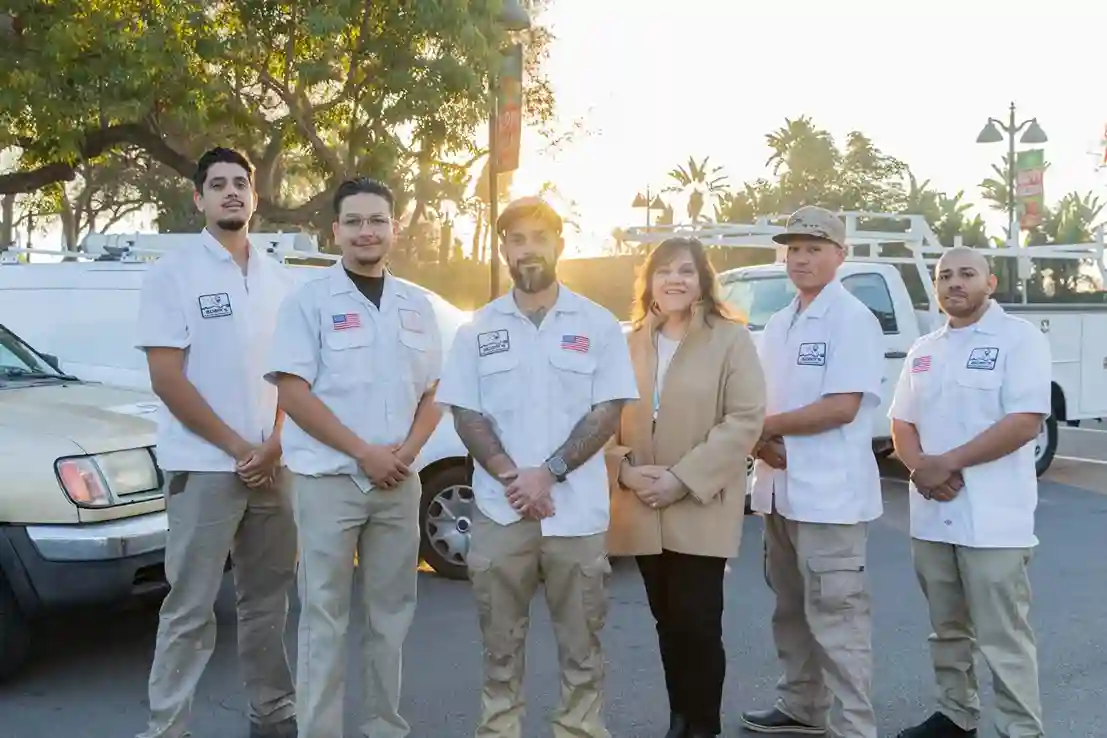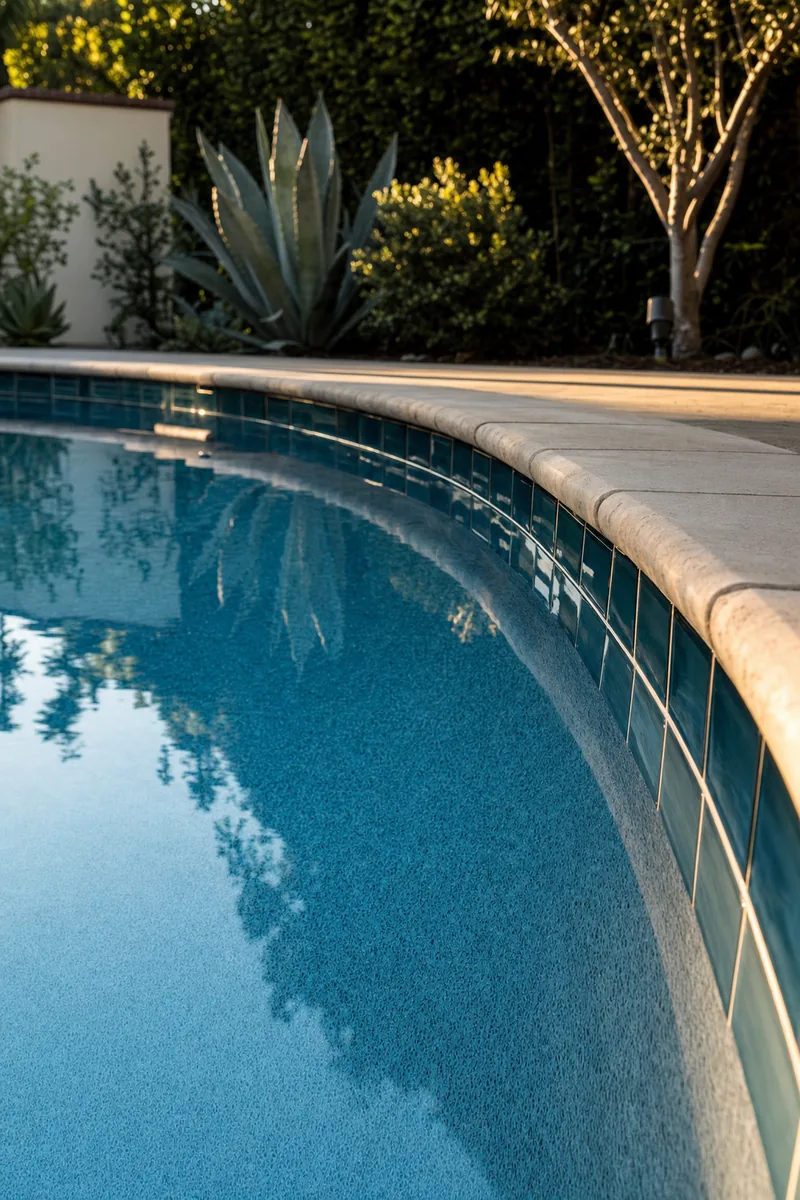
Can you resurface your pool yourself? Technically you can, and the tools are available to rent, but for nearly every homeowner in Long Beach and the South Bay this is one of the few pool jobs where doing it yourself usually costs more than hiring it out. A resurface that goes wrong cannot be patched. It has to be chipped back out and redone from scratch, which means you pay for the finish twice. I'm Adam, owner and lead technician at Adam's Pool & Spa, and I've resurfaced, built, and repaired pools across Long Beach, Manhattan Beach, and the rest of the South Bay for about fifteen years. Below are the five real risks I see when a homeowner takes on a resurface alone, and why this is the one job I steer people toward hiring out.
Can I resurface my pool myself?
You can legally resurface your own pool, but the work sits at the hard end of pool ownership, well past the routine maintenance you can safely learn by doing. Resurfacing means stripping the old interior finish down to the bare shell, prepping that surface so a new coat will actually bond to it, applying plaster, quartz, or pebble by hand, and then starting the pool up on a tight chemical schedule while the finish cures. Each of those four stages can fail on its own, and a failure at any single stage shows up across the entire pool as staining, flaking, or a finish that separates from the shell within a season. That is what makes resurfacing different from cleaning a filter or balancing chemistry. There is no easy undo.
Risk 1: Poor surface prep causes the new finish to delaminate
The single most common way a resurface fails is a bad bond, and the bond is decided before any new material goes on. A new interior finish only holds if the old surface underneath it is properly chipped, cleaned, etched, and coated so the fresh layer grips it. Skip or rush that prep and you get delamination, where the new plaster or pebble separates from the shell in sheets or bubbles. It might look flawless the day you fill the pool and then start lifting and flaking a few months later.
The reason this trips up homeowners is that prep is invisible work. It does not feel like progress, so it gets shortchanged. A professional crew treats the bond coat as the whole job, because they know a finish is only as good as what it is stuck to. When I inspect a failed do-it-yourself resurface in Long Beach, the material on top is usually fine. It was the prep underneath that let go.
Risk 2: Plaster is unforgiving and the application window is short
Once the new finish starts going on, the clock is running and it does not stop. Pool plaster and pebble finishes begin to set from the moment they are mixed, so the entire interior of the pool has to be troweled to a consistent, smooth surface within a tight window, usually while several batches are being mixed and applied in sequence without a visible seam between them. This is why crews resurface a pool with several trained hands working at once, not one person moving around the shell.
A single person almost never keeps up. The material sets in the bucket, the troweling gets uneven, and you end up with what we call trowel burn, color mottling, and gray blotches baked permanently into the surface. Those marks are not dirt you can scrub off later. They are in the finish for its whole life. Uneven troweling also leaves rough patches that catch algae and feel bad underfoot. On a job where the finished look is the entire point, the short working window is the risk that quietly beats most first-timers.
Risk 3: You can damage the shell, plumbing, and hidden fittings
Getting the old finish off is heavier and more dangerous work than it looks. Stripping a pool means chipping out the existing plaster with power tools, and it is easy to go too deep and gouge the gunite or concrete shell underneath, which then needs structural repair before you can even think about a new finish. Around the drains, returns, steps, and light niche, the old finish has to be cut back cleanly without cracking the fittings or the pipes feeding them.
There is also a hazard most homeowners never hear about until it bites them. A drained pool shell can float or crack from ground water pressure pushing up from below, which is why the hydrostatic relief valve at the main drain has to be handled correctly before and during the job. Get that wrong in a high water table after a wet winter and the shell itself can be damaged. This stage is not just about the finish anymore. It is about the structure and the plumbing that the finish sits on, and mistakes here turn a cosmetic project into a construction repair.
Risk 4: The wrong material or a self-install voids the warranty
Resurfacing is also a decision, not just a task, and the decision is easy to get wrong alone. Standard plaster, quartz blends, and pebble aggregates behave differently in cost, feel, stain resistance, and lifespan, and the right pick depends on how you use the pool, your water chemistry, and how long you want the finish to last. Homeowners often choose on price alone and end up with a surface that fights their water or wears out years early.
The quieter cost is the warranty. Most finish manufacturers back their product only when it is installed by a certified applicator following their exact spec, so a self-install can void the material warranty before the pool is even full. If that finish then fails, you are covered by nothing, and you are paying full price to redo it. Part of what you hire a pool builder for is the paper trail. The finish is warrantied, the install is warrantied, and someone stands behind both.
Risk 5: A botched startup permanently stains the new surface
The job is not finished when the pool is full. A fresh plaster or pebble finish is chemically raw, and the first two to four weeks are a startup process with a strict routine of brushing, careful chemical balancing, and daily attention while the surface cures. This is the stage homeowners underestimate the most, because the pool already looks done.
Skip the brushing and you lock plaster dust into the surface. Let the chemistry swing during curing and you get permanent scaling, gray streaks, or blotchy staining etched into a finish that was perfect the day it was filled. There is no fixing a startup gone wrong short of resurfacing again. A curing finish is soft and reactive, and it records every mistake you make in that first month. Doing the resurface right and then losing it to a rushed startup is the most frustrating way this project fails, and I have been called to look at exactly that more than once.
Why hiring a pro is usually the cheaper path
Add those five stages up and the pattern is clear. Prep, application, demolition, material choice, and startup each have to go right, and a miss on any one of them can cost you the entire finish. That is the real reason a professional pool resurfacing service tends to be cheaper in the end than doing it yourself. You are not just paying for labor. You are paying for the job to be done once, backed by a warranty, by a crew that resurfaces pools every week across Long Beach and the South Bay. When the downside of a mistake is redoing the whole pool, experience is the cheapest thing you can buy.
The questions Long Beach and South Bay pool owners ask us most before deciding whether to resurface a pool themselves, answered plainly.
A resurface is worth doing once, done right
Resurfacing is one of the few pool projects where the smart move is almost always to hire it out, because the cost of a mistake is the whole finish, not a small patch. If your plaster is failing, your finish is staining or flaking, or you are weighing a resurface against a full remodel, the honest first step is a straight conversation about your pool and your options. Reach out to Adam's Pool & Spa and I will look at what you actually have, tell you whether it needs a full resurface or something smaller, and give you a plan built to last the decade it should. We serve Long Beach, Manhattan Beach, and the surrounding South Bay, we are Jandy Certified and a Pentair Expert Installer, and we back our work with a twenty-four hour callback guarantee.
Adam is the founder, owner, and lead technician of Adam's Pool & Spa, serving Long Beach and surrounding LA County for about fifteen years. He is Jandy Certified and a Pentair Expert Installer, and he built the business on education-first, anti-pressure service, including the "Pool School" session every new client gets.