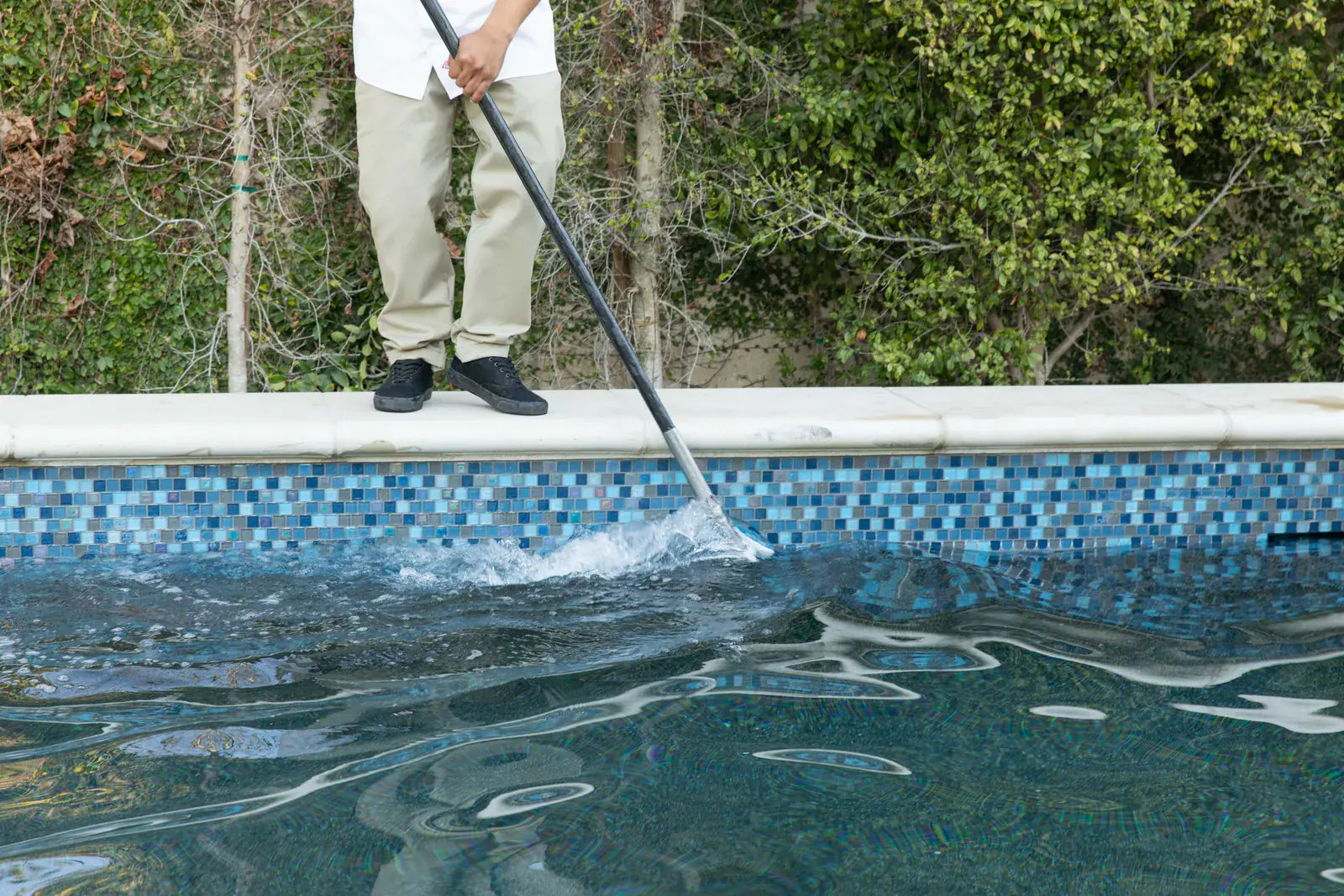
Skim and brush 2 to 3 times weekly
Two or three brushings a week, not just one. The brush dislodges algae spores from plaster pits and tile lines before they bloom. Payoff: fewer reactive shock doses and clearer water by Saturday.
It can oftentimes feel like a drag and is also pretty taxing, so most homeowners freeze. The most important pool cleaning tips for Long Beach pool owners are weekly skim and brush, twice-weekly water tests, 8 to 12 hour pump runs, and a clear line where DIY stops. This guide names 12 tips, the cadence, and the payoff.
Adam's Pool and Spa Service has run weekly routes across Long Beach for about 15 years. We onboard new pool owners with a Pool School walkthrough, and we publish the same checklist here so you can self-audit before the next hot weekend.
The most important pool cleaning tips are skim and brush 2 to 3 times weekly, test water 2x weekly in summer, run the pump 8 to 12 hours, backwash at 8 to 10 PSI above clean, hold cyanuric acid at 30 to 50 ppm, empty skimmer baskets every 3 to 4 days, scrub waterline tile monthly, vacuum weekly, watch the water level, inspect equipment monthly, cover the pool when idle, and book a seasonal tune-up.
Run this routine and your pool water stays clean, balanced, and swim-ready because of attention to detail.
Twelve habits cover the bulk of what keeps a pool clean and swim-ready week to week. Each card names the cadence, why it matters, and the payoff next month.
Two or three brushings a week, not just one. The brush dislodges algae spores from plaster pits and tile lines before they bloom. Payoff: fewer reactive shock doses and clearer water by Saturday.
Long Beach chemistry shifts in 4 hours of midday sun. Free chlorine, pH, and alkalinity move daily. Test twice weekly in summer, once in winter. Three minutes prevents a green-pool emergency.
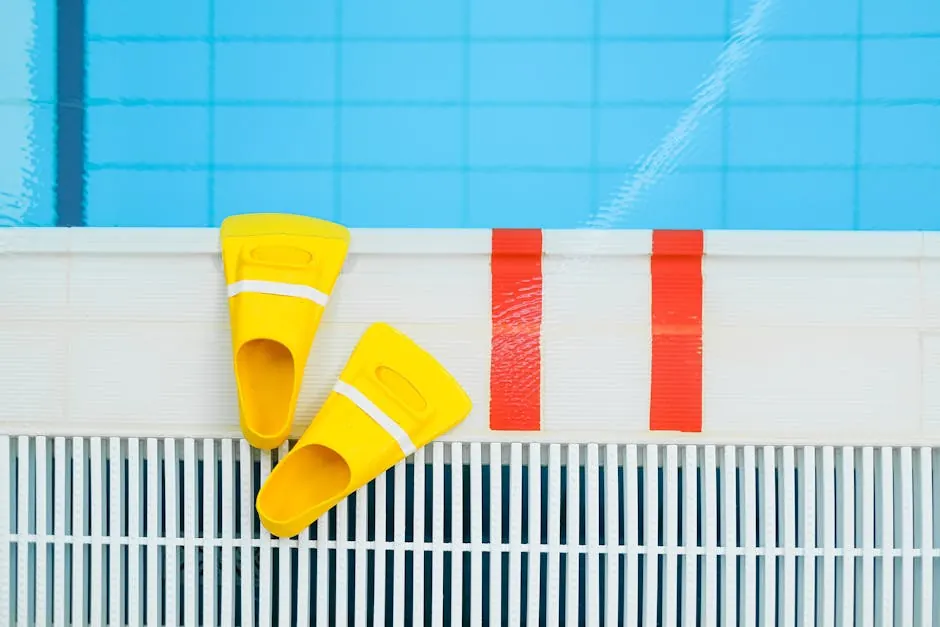
Pool water needs one full turnover daily, which lands at 8 to 12 hours in our climate. Year-round swim means no off-season relief. A variable-speed pump cuts 30 to 40 percent of the bill.
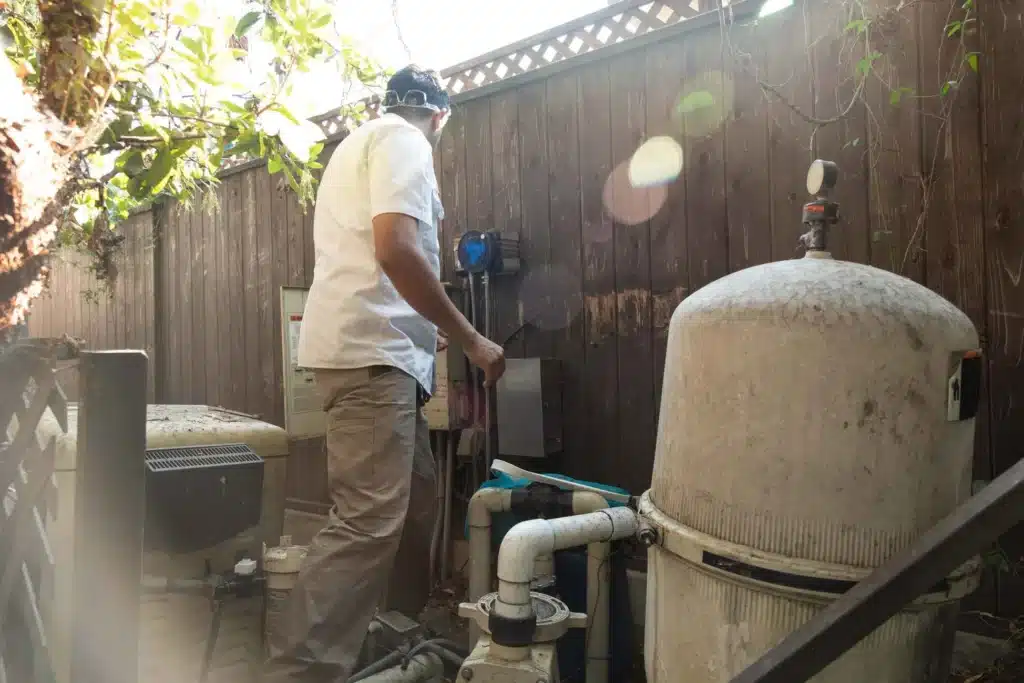
The pressure gauge is the cheapest diagnostic on the pad. Write the clean baseline on the housing in Sharpie. Backwash sand or DE at the 8 to 10 PSI rise. Hose cartridges monthly.
CYA stabilizes chlorine against UV but binds it above 80 ppm. Hold 30 to 50 ppm for chlorine pools, 60 to 80 ppm for salt cells. Test CYA monthly. Fix high CYA with a partial drain.
A clogged skimmer basket starves the pump and burns the impeller. Empty baskets every 3 to 4 days, daily on windy days, after storms. Two minutes per visit, big payoff in pump life.
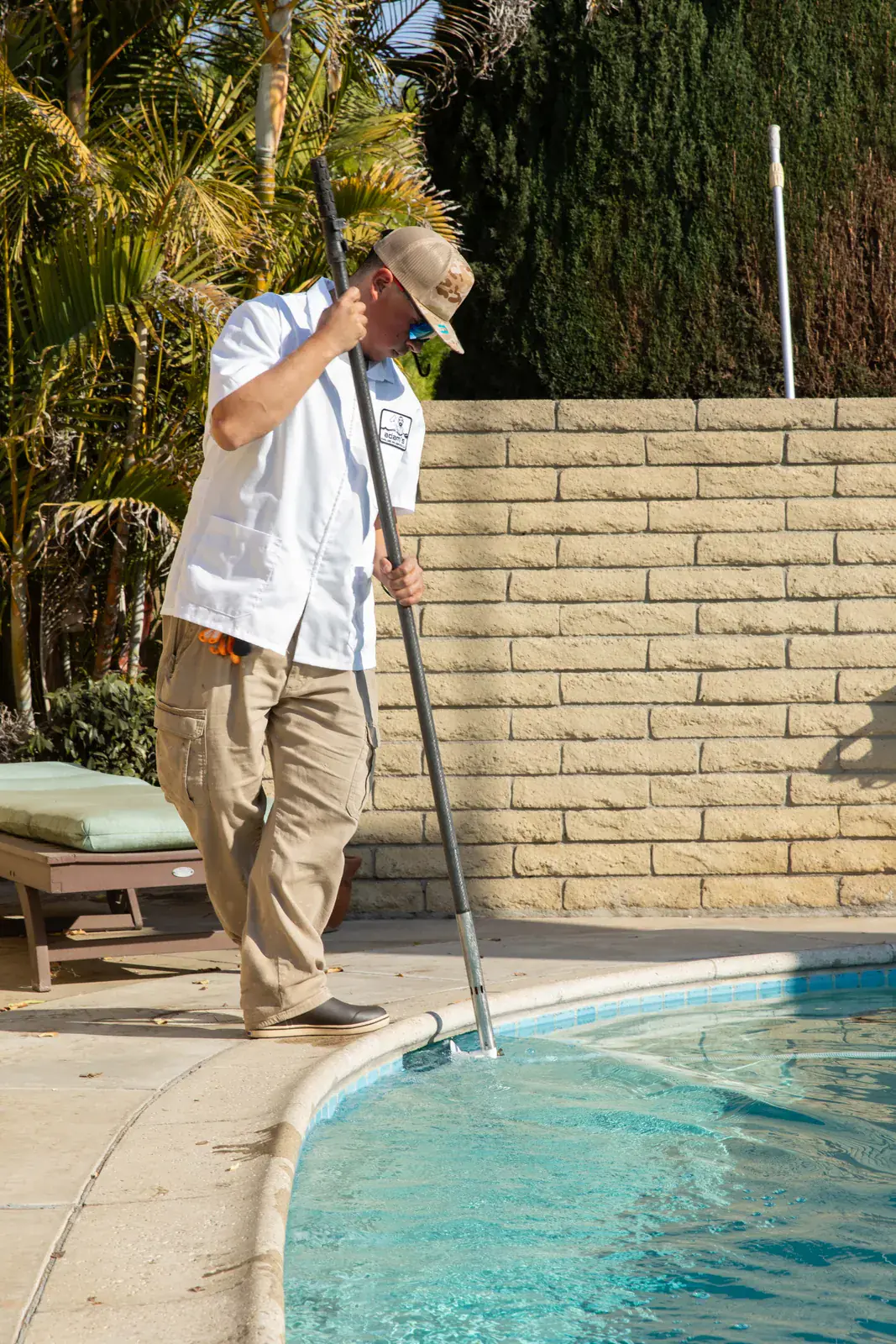
Calcium and oils build a gray ring at the waterline within weeks on coastal pools. A dry-tile brush and non-acid cleaner once a month prevents a $400 to $1,200 tile bill later. Hard water makes it non-negotiable.
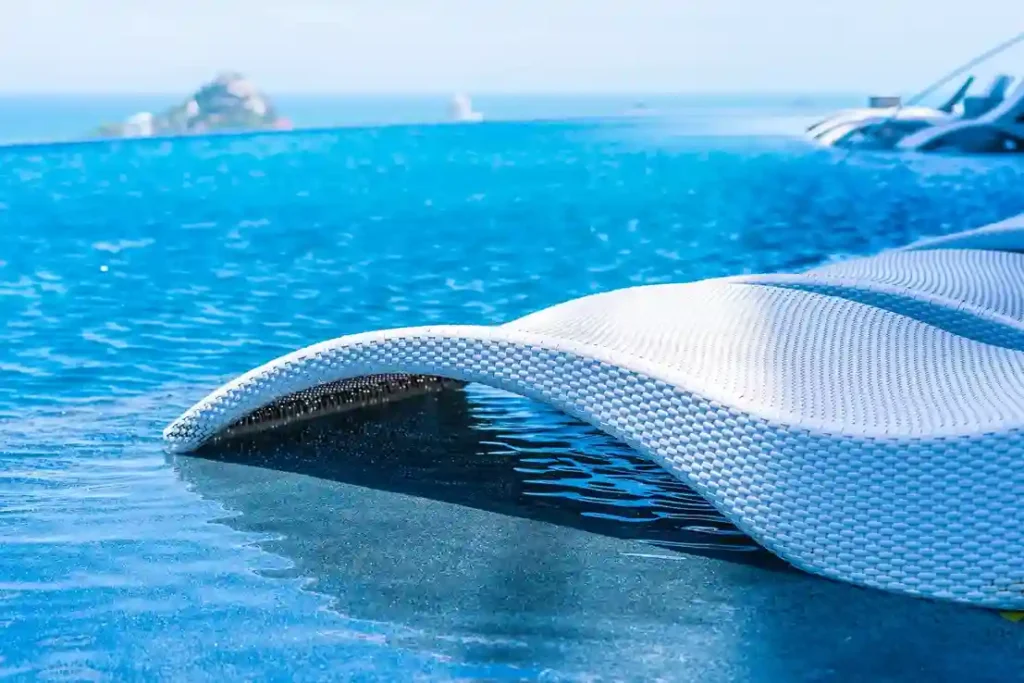
A manual vacuum or a quality automatic cleaner once a week pulls fine debris the skimmer misses. Vacuum to filter for normal debris, to waste after a storm or algae cleanup. See our pool maintenance mistakes guide.
The water line should sit at the middle of the skimmer opening. Below, the pump pulls air and cavitates. Above, the skimmer can't sweep the surface. Long Beach summer drops 1 to 2 inches a week.
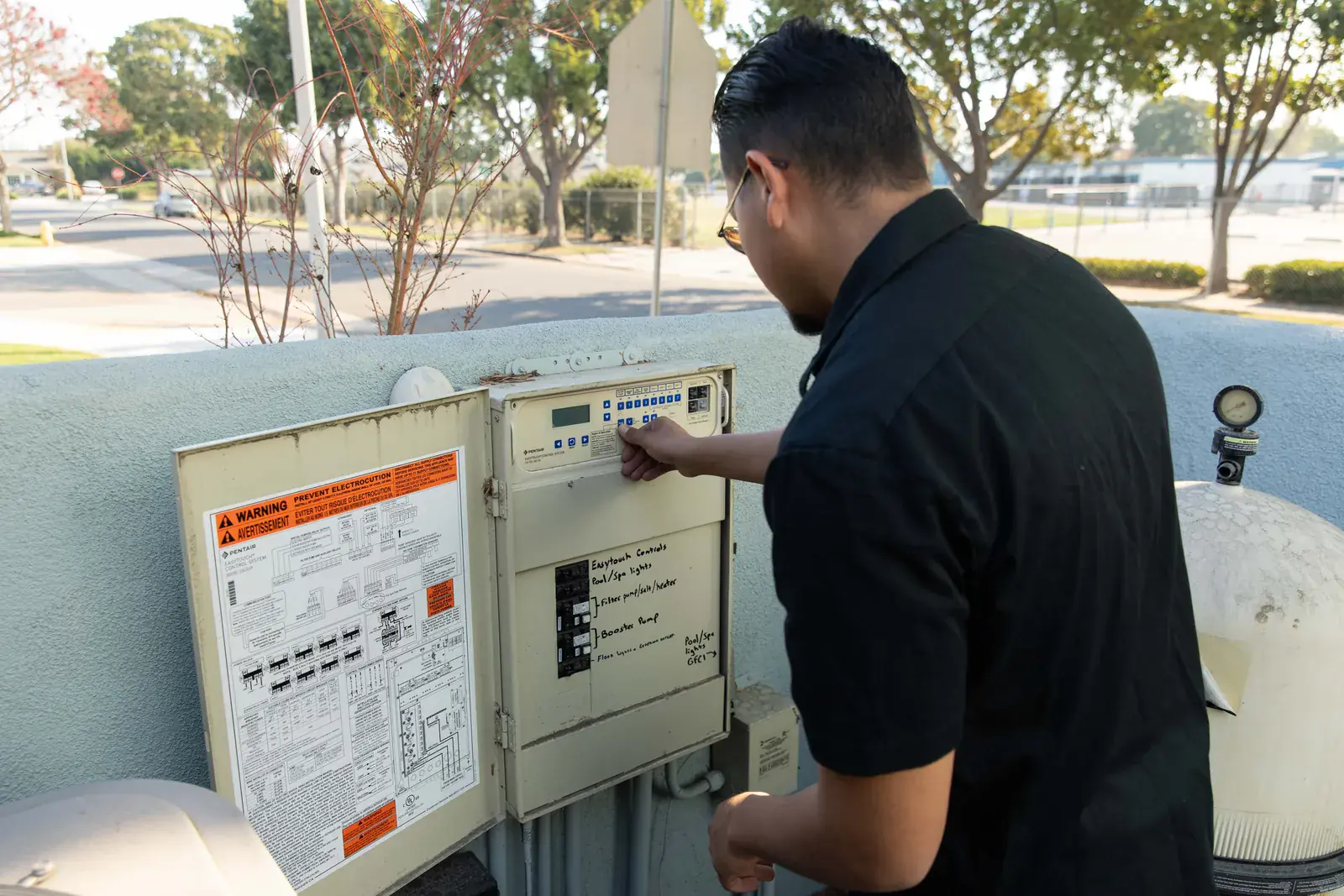
Five minutes around the pad once a month catches small problems early. Look for drips at the pump seal, rust on the heater, frayed wires, and unusual motor sounds. Catch a leak at $40, miss it at $800.
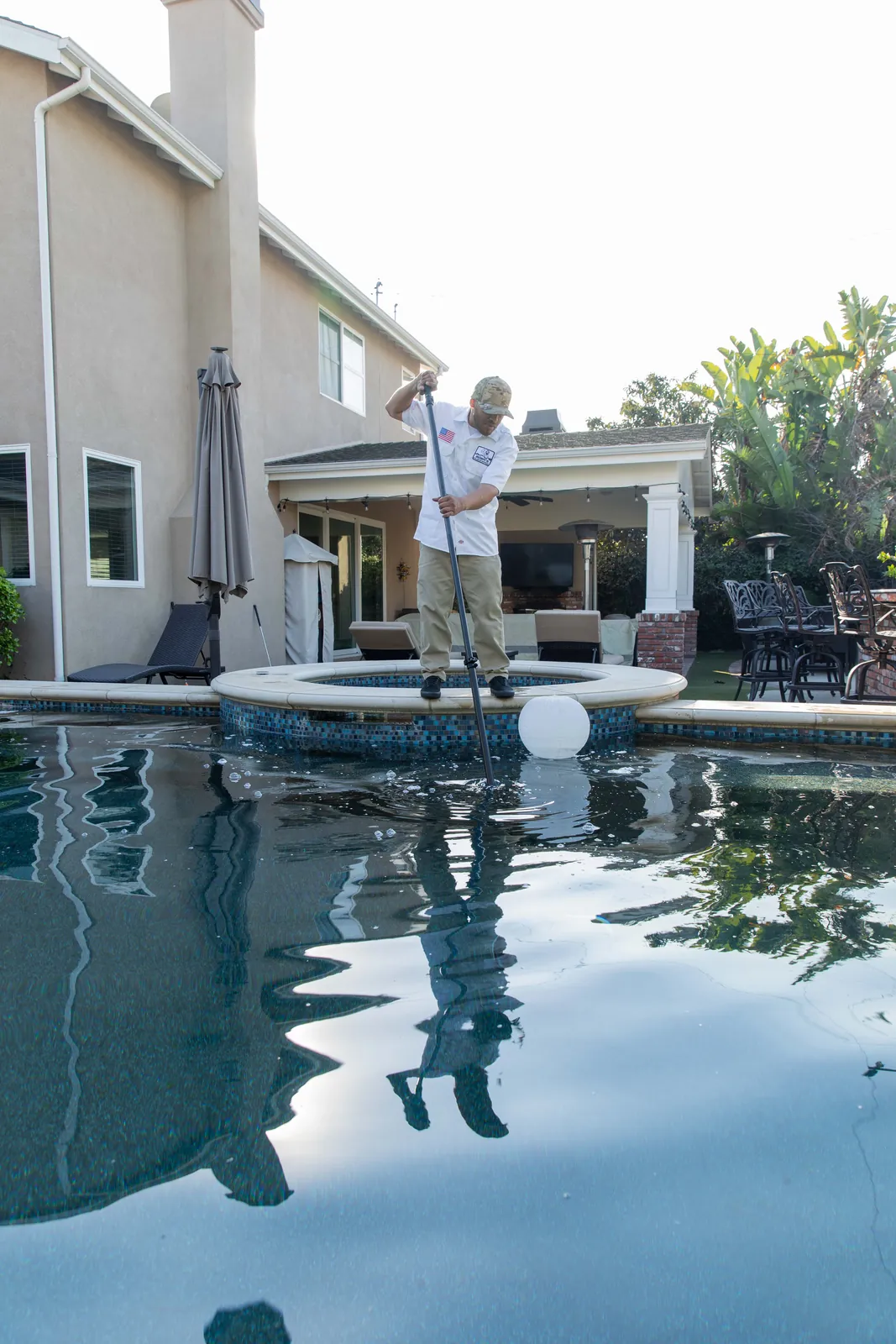
A solar or safety cover cuts evaporation by 50 to 70 percent and slows the chemistry shift the sun drives. Less evaporation means less makeup water and less top-up. Pays back within a season.
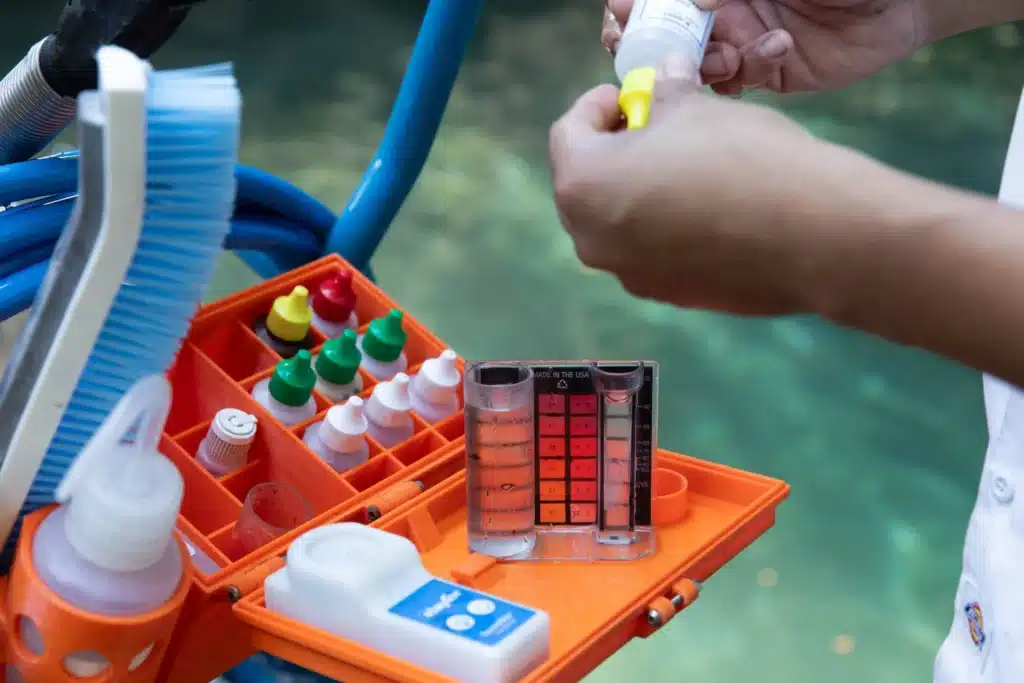
Once or twice a year, book a stand-alone chemistry tune-up and equipment audit. A pro reads with a digital photometer, calibrates the salt cell, and catches what the test strip misses. See residential chemical balancing.
Most weekly cleaning is honest DIY work. The line where homeowner DIY stops and a pro starts has stayed the same for 15 years on coastal pools. Anything past the time clock, anything gas, anything jackhammer is a pro call.
The honest answer is that the pro does not skip steps. Adam onboards every new client with a Pool School walkthrough so the homeowner sees the same routine the route tech runs.
Free chlorine, pH, alkalinity, calcium, and CYA logged in a notebook or app. No guess dosing.
Brush walls, steps, behind the ladder, around the light niche. Skim debris off the surface. Vacuum the floor on the visit.
Pump basket, every skimmer basket, automatic cleaner bag. A clogged basket starves the pump and burns the impeller.
Compare against the clean baseline written on the housing. Backwash or hose cartridge at the 8 to 10 PSI rise, not on a calendar.
Drip check, rust check, wire check, sound check. Five minutes catches the leak before it floods.
A variable-speed pump set to 8 to 12 hours daily, with a low-speed overnight cycle. Cuts the bill, keeps turnover.
Chemistry, what was added, equipment status. The log is what makes a pool predictable from week to week.
"adam and his crew just cleaned our pool at the new house after it had been neglected and it looks brand new. so blue and clear water. gave us a bunch of knowledge on how to help take care of it in between cleanings."
"Adam services my pool and consistently provides excellent, reliable service. He handles everything you'd want from a professional pool and spa company: regular cleaning, chemical balancing, water testing, filter maintenance, equipment checks, troubleshooting, and seasonal upkeep."
"Adam's Pool and Spa Service service was communicative, competitively priced, timely, and professional at every step of my pool filter and salt water chlorinator install. Adam explained every piece of equipment and how to maintain it in a way that I could understand."
Adam's Pool and Spa Service is based in Long Beach and covers every neighborhood plus surrounding LA County. Our weekly route radius runs roughly 25 miles from 910 E 72nd Street.
Owner-led routes, year-round swim chemistry. See Long Beach.
Coastal pumps, salt-air chemistry adjustments, marine layer humidity work.
Inland routes, hard-water tile staining and CYA correction.
Pump run-time tuning, variable-speed upgrades, filter rebuilds.
LA County coastal and inland weekly runs.
Full LA County coverage map. See all locations.
Two to three times a week, year-round, in Long Beach. Once-a-week brushing leaves algae spores in plaster pits and tile lines long enough to bloom. Brush walls, steps, behind the ladder, around the light niche. Two minutes of brushing per visit kills what future shock would never reach.
8 to 12 hours daily on most residential Long Beach pools, year-round. Year-round swim season here means there is no off-season turnover relief. A variable-speed pump on a low overnight cycle covers the turnover at 30 to 40 percent of the electric cost of a single-speed pump.
Twice a week in summer, once a week in winter. Free chlorine, pH, and alkalinity test in three minutes with a strip or photometer. Test cyanuric acid and calcium hardness once a month. The cadence prevents the green-pool emergency that costs $300 plus.
When the pressure gauge rises 8 to 10 PSI above its clean baseline. Calendar-based backwash wastes water on a clean filter and starves a clogged one. Write the clean baseline on the housing in a Sharpie at startup. Read the gauge every visit.
30 to 50 ppm for a chlorine pool, 60 to 80 ppm for a saltwater chlorinator. Above 80 ppm, free chlorine binds to CYA and stops sanitizing. The fix for high CYA is a partial drain to dilute, never more shock. Our pool maintenance mistakes guide covers the lockout in depth.
For a pool with balanced water and a clean filter, weekly DIY can work. The math flips when chemistry drifts, CYA builds up, or the pump is past 8 years. One algae bloom or pump rebuild covers a year of service. Customers tell us the service is worth the extra cost.
Look for named credentials, not generic experience. Jandy Certified and Pentair Expert Installer are manufacturer programs you can verify. Look for tenure in your specific neighborhood and reviews dated multiple years apart. Adams has clients in Long Beach who first signed on back in 2016.
The line is clear. Skim, brush, vacuum, basket clean, water-level top-up, cartridge hose-down stay DIY. Gas heater work, electrical pad work past the time clock, jackhammer plumbing, CYA partial drain, and salt-cell acid deep cleans need a pro. The diagnostic call when something feels wrong but you cannot name it is also a pro call.
Call Adam's Pool and Spa Service for a weekly service quote, a chemistry audit, and a Pool School onboarding session that walks you through the routine. We answer Monday through Saturday, 7 AM to 5 PM.
Related reading: residential pool cleaning service · residential weekly pool maintenance · residential chemical balancing · residential pool filter cleaning · pool maintenance mistakes · common pool problems · why is my pool green · why is my pool cloudy · pool chlorine levels guide · how to lower pH in pool · seasonal pool care calendar.
External references: Wikipedia entry on swimming pool sanitation · CDC residential pool water testing and treatment guidance · U.S. Consumer Product Safety Commission pool and spa safety center.