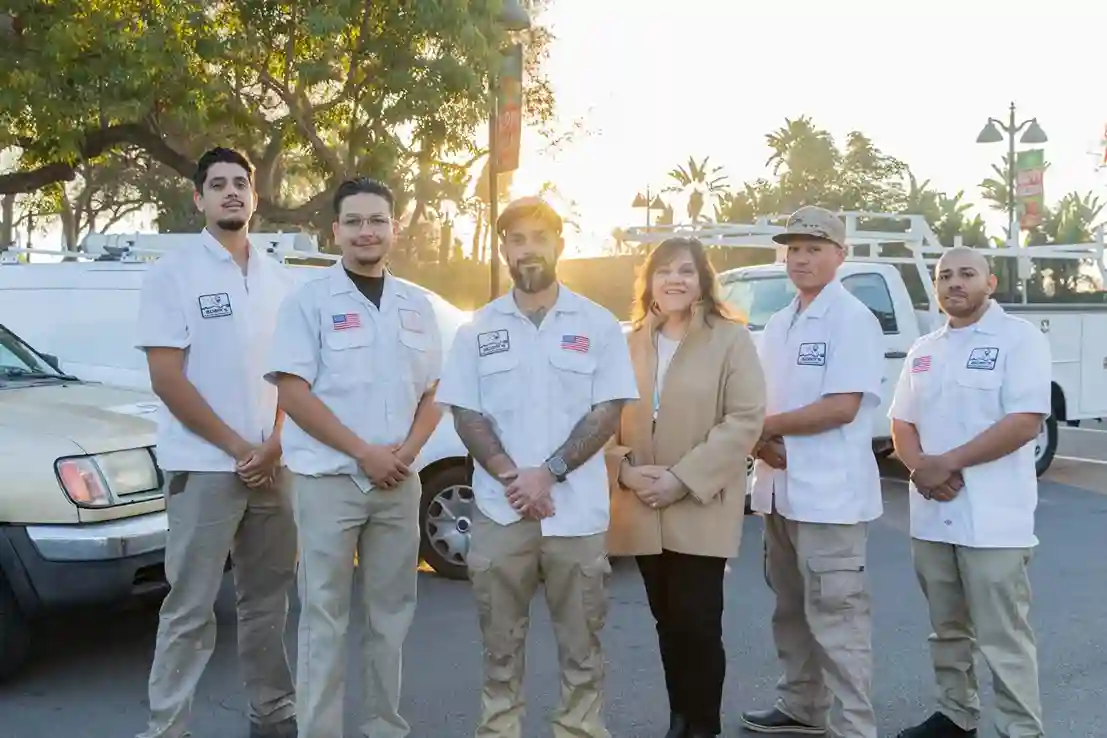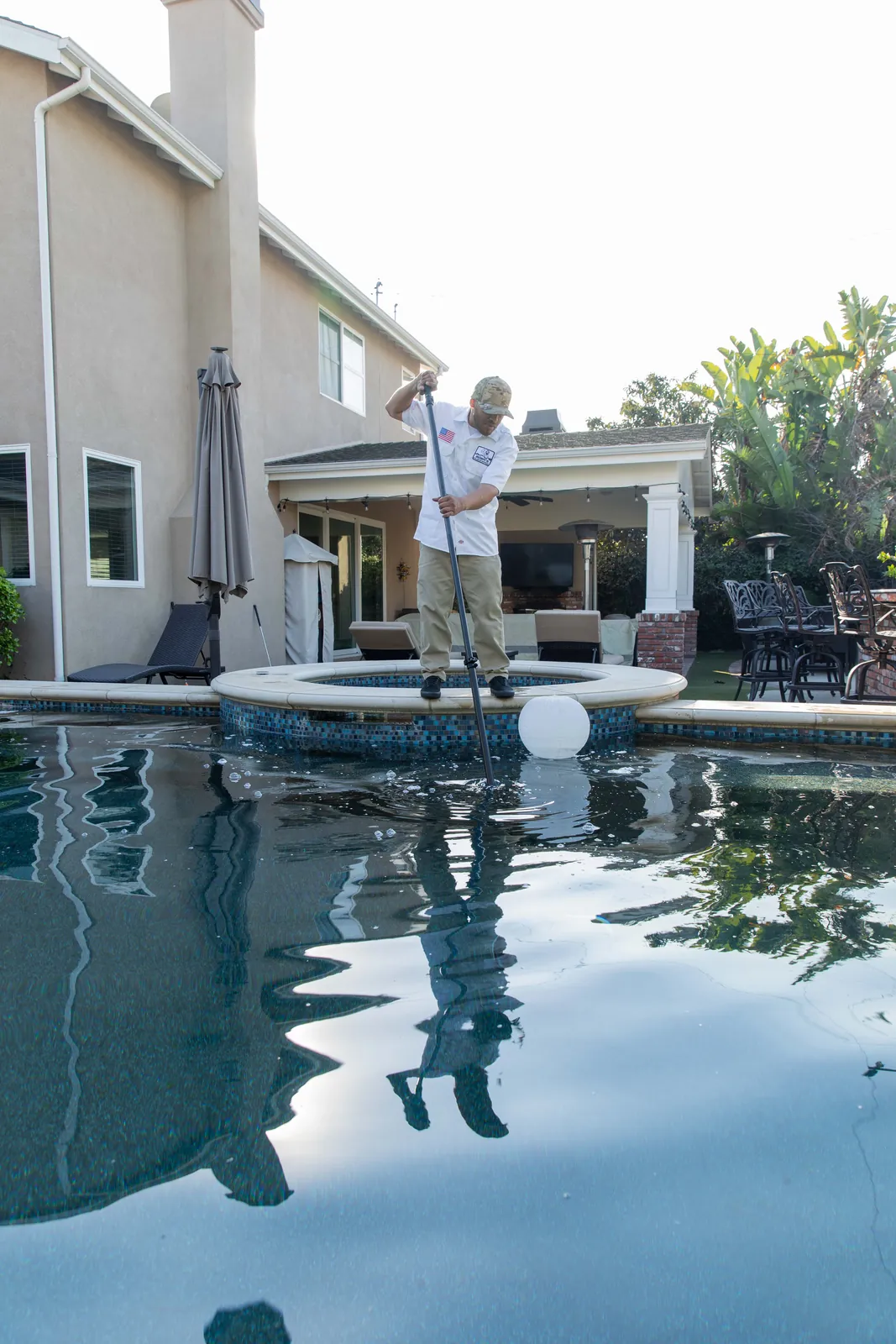
How much does a 12x24 inground pool cost? In the Long Beach and South Bay market, a 12 by 24 foot inground pool usually runs somewhere between about $45,000 and $100,000 built, and the exact number comes down to five things: the construction method, your site conditions, the interior finish, the equipment package, and local permitting and labor. I'm Adam, owner and lead technician at Adam's Pool & Spa, and I've built, resurfaced, and serviced pools across Long Beach, Manhattan Beach, and the South Bay for about fifteen years. This guide breaks those five factors down so you can read a bid and know exactly what you're paying for.
1. The construction method sets the floor price
The single biggest driver of what a 12 by 24 inground pool costs is how it's built, because the three main methods start at very different price points. A 12 by 24 footprint is about 288 square feet of water, which is a compact family pool, so the method you choose matters more than the size at this scale.
Vinyl liner pools use a steel or polymer wall frame with a custom liner dropped inside, and they're usually the least expensive to install, often in the range of $40,000 to $65,000 here. Fiberglass pools arrive as a single molded shell that gets craned into the hole, which speeds up the build and lands somewhere around $50,000 to $85,000 for this size once delivery and the crane are figured in. Gunite or concrete pools are sprayed in place over steel rebar, which lets us shape any depth or edge you want, and they're the most durable and the most expensive, commonly $60,000 to $100,000 or more for a 12 by 24 in this market.
The reason concrete costs more up front is the same reason most of the custom pools I build in Manhattan Beach and the South Bay are gunite: it lasts for decades and can be resurfaced rather than replaced. A vinyl liner needs swapping every seven to twelve years, and a fiberglass shell is fixed in shape forever. So the cheapest build isn't always the cheapest pool over twenty years, which is the trade every honest bid should spell out.
2. Your site and soil conditions
Two identical 12 by 24 pools on two different lots can differ by many thousands of dollars before a single feature is added, and the reason is what sits under and around the pool. This is the factor homeowners almost never see coming.
Access is the first piece. If a mini excavator and a concrete truck can reach the backyard easily, digging and pouring are straightforward. If we have to carry equipment through a narrow side yard, work around a slope, or haul the spoil dirt out by conveyor, the labor hours climb fast. Then there's what's in the ground. Rocky or clay-heavy soil is slower to excavate, and near the coast in Long Beach and the South Bay a high water table can mean extra dewatering and a more engineered base so the pool sits stable for the long term. Old footings, buried utilities, or a tight setback from the property line all add cost too.
None of this shows up in a glossy per-square-foot number, which is why I always walk the actual site before quoting. A cost you can plan for beats a low bid that grows once the digging starts.
3. The interior finish and resurfacing choices
The finish is the surface you actually touch and see, and it's one of the widest-swinging line items on a 12 by 24 build because the material choices range from basic to premium. It's also the part of the pool you'll pay to renew down the road, which ties your construction cost to long-term service.
Standard white plaster is the entry finish and the most affordable, but it wears and stains faster, so most of my clients step up to a quartz or pebble aggregate finish that lasts longer and looks richer. On a pool this size, moving from plain plaster to a pebble finish can add several thousand dollars. Waterline tile and the coping around the edge are separate choices on top of that, and premium glass tile or natural stone coping can add several thousand more.
Here's the connection worth understanding: every plaster or aggregate finish has a lifespan, usually ten to fifteen years, after which the pool needs resurfacing. When you're pricing a new build, the finish you pick sets both today's cost and the size of that future resurfacing bill. Pool resurfacing is a core part of what we do, so I'd rather you choose a finish that fits your budget for the long haul than the cheapest one that needs redoing sooner.
4. The equipment and features package
Everything that moves water, heats it, cleans it, or lights it is its own cost, and the equipment package is where a 12 by 24 pool quietly gains ten or twenty thousand dollars depending on how you spec it. The shell holds the water, but the equipment is what makes it a pool you actually enjoy.
The baseline is a pump, a filter, and plumbing, and even here the choice matters. A variable-speed pump costs more up front than a single-speed but runs far cheaper and is required by California energy code, so it's money well spent. From there the additions stack: a gas or heat-pump heater to extend your swim season, LED lighting, automation you run from your phone, a saltwater chlorination system, and an attached spa are all popular in the South Bay, and each carries its own price. An integrated spa alone can add a meaningful share to the total because it's essentially a second small vessel with its own heater and jets.
My advice is to build the pool structure and plumbing to accept the features you might want later, even if you don't buy them all now, because retrofitting a heater or spa line after the deck is poured costs far more than roughing it in during construction.
5. Permits, engineering, and local labor
The last factor is the one nobody enjoys but everybody pays: the cost of building legally and safely in this specific market. Southern California is one of the more expensive places in the country to build a pool, and permitting and labor are a big part of why.
A pool in Long Beach or the South Bay needs permits, plan review, and inspections, and on many lots it needs a soils or structural engineering report because of seismic requirements and coastal soil conditions. Those fees and drawings are real money before anyone digs. Labor rates here run higher than the national average too, and a 12 by 24 gunite build still involves the same skilled trades, excavation, steel, plumbing, gunite, electrical, plaster, and finish work, as a larger pool, just over a smaller area. That's why a compact pool doesn't cost proportionally less than a big one: a lot of the cost is fixed no matter the size.
I mention this not to discourage you but so a bid makes sense. When one quote comes in thousands below the others, it's usually because permits, engineering, or code-required equipment got left out, and those always come due eventually.
A few of the questions Long Beach and South Bay homeowners ask me most when they're pricing a 12 by 24 inground pool, answered straight.
Plan the pool once, and plan it right
A 12 by 24 inground pool is a genuinely great size for most Long Beach and South Bay backyards, and the price only feels unpredictable until you know these five levers: build method, site conditions, finish, equipment, and local permitting. Once you can see those, a bid stops being a mystery number and starts being a plan you can budget for. If you're weighing a new build, or thinking about resurfacing the pool you already have, tell us about your project and I'll walk your site, give you an honest range, and never quote you for work you don't need. We serve Long Beach, Manhattan Beach, and the wider South Bay.
Adam is the founder, owner, and lead technician of Adam's Pool & Spa, serving Long Beach and the surrounding South Bay for about fifteen years. He is Jandy Certified and a Pentair Expert Installer, and he built the business on education-first, anti-pressure service, including the "Pool School" session every new client gets.